
If you want to discover all the wonders of the Australian Great Barrier Reef, I know the perfect base camp for you: Cairns.
And there's even more…
North of Cairns, two titans converge: the largest known living organism, the Great Barrier Reef, and the oldest tropical rainforest on Earth, ‘Daintree Rainforest’. A paradise that will delight any nature lover. My recommendation: don't miss it.
The city of Cairns
Cairns is a perfect base camp for exploring both spots, as it offers accommodation and dining options suited to all (or almost all) budgets. Plus, thanks to the large number of agencies in town, tour prices stay a bit lower than in other places where supply and demand are more limited, such as Port Douglas, further north.
It is not a pretty town at all, but rather a set of very wide streets laid out on a grid, completely geared towards tourism.
You'll find hotels, hostels, guesthouses, restaurants, bars, fast-food spots, and thousands of travel agencies with deals for trips out to sea or into the jungle. Therefore, nothing about the city's vibe feels truly authentic; everything is set up to cater to visitors.
Still, you have to admit that, since tours are generally quite expensive, being able to sleep here and eat on a budget makes it possible for many of us to afford visiting these natural wonders.
Although Cairns is on the coast, its beaches (more like mudflats) are unusable, as there are saltwater crocodiles in the area. We didn't see any, but they are there and can show up at any moment. These animals are very fast and strong—the only true Australian predator to humans. Any other animal, if it harms you, will do so accidentally (like a jellyfish) or to defend itself (like a snake or spider feeling threatened by you). For a croc, though, you might just be food. So when you see a 'crocodiles' warning sign in Australia, don't take any chances—stay well clear.
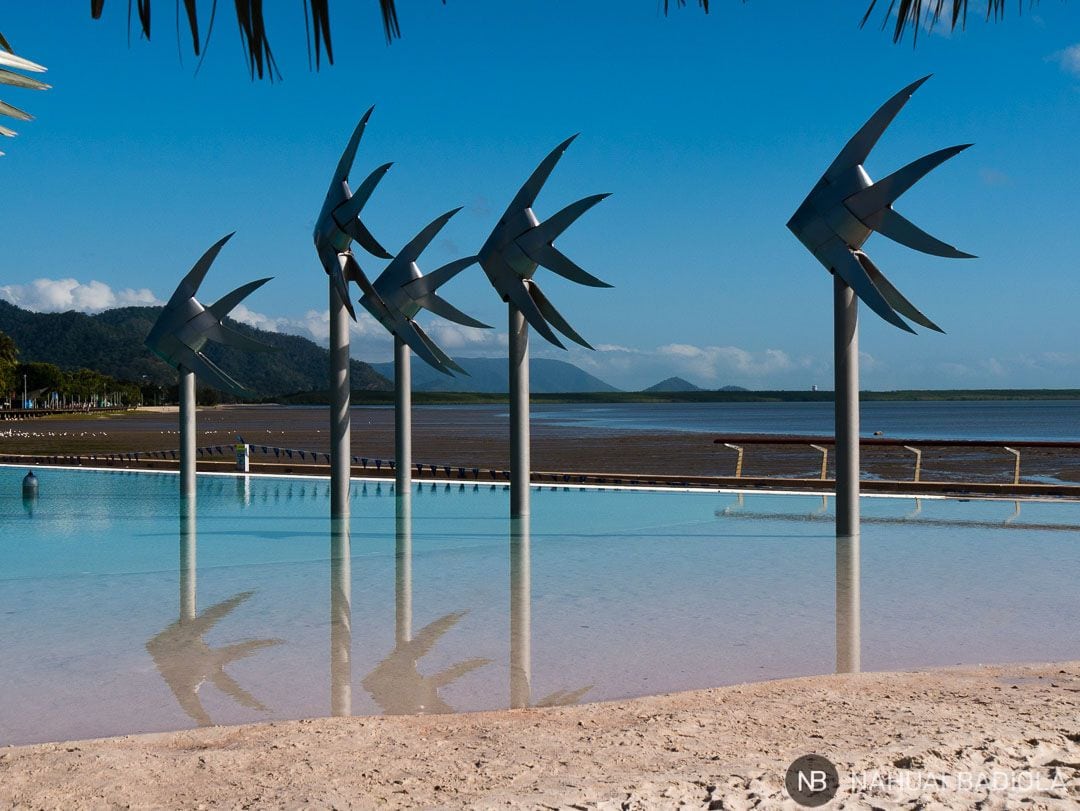
To make up for this and beat the heat, right in the city center along the Esplanade (you can check out the map at the end of this post), you'll find what's called ‘The Lagoon’; a huge artificial pool with sand on one side, beach-style, and steps on the other. It doesn't have saltwater, but chlorinated water, just like a regular pool.
It is surrounded by a large expanse of grass where you'll see plenty of people sunbathing, eating, reading, or hanging out with friends. When you've run out of money for tours or want to unwind after one, this is the perfect spot to spend a relaxing day.
When to go
Cairns is located in a tropical region with two distinct seasons, one wet and one dry. The wet season runs from December to April, with temperatures ranging from 23 to 32ºC and heavy rain. Sea temperatures hover around 26-29ºC from November to May, which also means it's stinger season in the region.
As you probably know, there are deadly jellyfish species in this area, though it's easier to encounter them on beaches than on the coral reef. If you travel during this time of year, reef tour companies will take all necessary precautions, like renting you stinger suits.
On the other hand, the dry season runs from June to October. During this time, temperatures are a bit lower, ranging from 17 to 25ºC in June and July, the coolest months. The water temperature can drop to 22ºC, but there are no stingers.
We were here during the last week of August 2015. The water temperature was around 23ºC, easy to handle for 1 or 2 hours of non-stop snorkeling if you wore a shorty wetsuit that wasn't too thick (5 mm).
It only rained on us for one day the entire week, and not too heavily, though there were clouds drifting by most days. The temperature was pleasant, without feeling overly summery yet (lows of 17, highs of 26ºC); and there were quite a few tourists in Cairns (nothing too overwhelming).
Discover the Great Barrier Reef
There are plenty of options at your fingertips for visiting the Great Barrier Reef from Cairns. Almost all companies have a website where they explain, to varying degrees, what's included in their tour prices and which part of the reef they head to.
Here are a few points you'll want to keep in mind when making your decision:
- The price and what's included. Almost all of them include complimentary food and water, as well as morning coffee/tea and some sweet treat or fruit on the return trip. Depending on the water temperature, you might want to factor in whether the wetsuit or stinger suit is included in the price. My advice is to do your research from home, but book once you arrive (unless you have your heart set on just one company that's known to sell out). You'll often find last-minute deals at the many travel agencies operating across town.
- Boat size. There are boats that take only 20 people and others that take nearly 200. If you want to escape the crowds, avoid the latter. If, on the other hand, you're looking for the cheapest options, keep them in mind. This is definitely worth considering if you're a beginner at snorkeling or scuba diving. Usually, smaller boats offer a much more personalized service.
- Where the tour goes. This is a super important point. Some boats decide which part of the reef to visit that very morning, depending on weather conditions. If you're only going on one trip, I'd recommend one of these, as it ensures you get the absolute most out of the Great Barrier Reef. If you're doing several trips, you might want to pick different spots. The area around Michaelmas and Hastings Reef is the most accessible from Cairns, so that's where you'll find the most deals. Since we also wanted to see other areas, we were advised to head to Agincourt Reef for scuba diving or around Moore Reef if we preferred snorkeling. It's also worth checking whether the boat docks at an activity pontoon. If so, keep in mind that you'll be sharing your experience with more people than just those on your boat, as multiple vessels tie up at the platform.
We did two tours, which I'll break down for you below:
Reef Day Trippers

This is a catamaran with room for 20 passengers (in our case, there were 17 of us). It departs from D-finger (‘finger D’) at the marina around 8:00 AM (you need to be there by 7:30 AM), and the crew is super friendly.
They always sail to Upolu Reef (you can spot it on the map at the end of this page), on the inner edge—and therefore closest to the mainland—of the ‘Outer Barrier Reef’. It takes about two hours to get there, which is quite a while when you compare the catamaran's pace to other boats you'll see speeding past you on the way out of the harbor. They make two stops within this reef; we visited the spots known as the 'Wonder Wall' and the 'Coral Gardens', both within Upolu Reef, with snorkeling sessions lasting between 1 and 1.5 hours each.
The trip costs 139 Australian dollars per person and includes morning tea or coffee, a cold buffet lunch (decent-to-good quality, featuring various salads, chicken, cold cuts, pasta, and bread), a snack of cheese, fruit, and wine on the return sail, plus complimentary water throughout the day. They provide all the snorkeling gear you need, except for the wetsuit, which cost us $6 to rent (for the shorty).
On the way out, they explain the basics of snorkeling in case you're a first-timer. If you'd rather go scuba diving, you pay an extra $65, and the group size will depend on how many divers are on board that day (usually no more than half the passengers, so around 10).

In summary, here are the pros and cons of this company:
- Type of boat. It allows for a trip without big crowds (20 people max) and more personal attention (especially great for beginners). However, the sailing speed is very slow compared to other boats, taking longer to reach a spot that isn't even that far from the mainland.
- Upolu Reef. We saw a ton of marine life (rays, green turtles, countless types of fish, and amazingly colorful corals). It was a wonderful experience, but it was also our very first taste of the Great Barrier Reef. After seeing other spots and taking several trips, we can conclude that Upolu Reef isn't among the most spectacular spots in this part of the Great Barrier Reef near Cairns.
Cairns Dive Centre (CDC)
This company offers day trips on the Reef-Kist, as well as overnight stays of one or more nights on the Kangaroo Explorer, a liveaboard vessel stationed on the outer reef near Moore Reef (the area this company visits).
The Kangaroo Explorer has terrible reviews, and I can confirm that from the outside, it looked pretty run-down and grimy.
However, the Reef-Kist used for day tours, although the indoor and outdoor seating wasn't in the best shape, wasn't too bad. Bearing in mind, of course, that we didn't have to sleep on it—just travel for a few hours.
It has a capacity for 75 people (technically only 40 for the 1-day tour) and departs from Cairns E-finger, where you're asked to meet at 7:00 AM. As soon as you step aboard, they hand you a shorty wetsuit included in the price (with long sleeves and very easy to put on thanks to a full front zip) and well-maintained snorkeling gear, plus a coffee or tea with some biscuits.

It's a fast boat that makes stops to drop off and pick up passengers at Fitzroy Island. The next stop, at least for us, was where the Kangaroo Explorer was anchored (a spot called '5 Ways', inside Moore Reef), since they needed to drop off passengers and transfer supplies. I assume they always do the stops in this order, as the hot lunch was brought over already prepared from the Kangaroo Explorer. It was a standard-quality hot buffet.
Next to the Kangaroo Explorer, we did our first snorkeling dive. We were told that free-diving was forbidden while snorkeling, which we didn't really like since no one had warned us beforehand, but once in the water no one checked on you, so we snorkeled at our own pace and leisure.
At first, being next to the other boat bothered us a bit, as it increased the number of potential swimmers in the area. However, almost all the passengers on the Kangaroo Explorer were scuba diving; and they avoided (I don't know why) jumping into the water during our time there.
Besides, the snorkeling we did in this spot turned out to be spectacular. It was a huge mushroom-shaped reef, with its top part sitting almost flush with the surface of the water.
Five longitudinal gaps ran through its body from the surface down to the seabed (which give it its name), allowing you to snorkel through its interior, and even scuba dive for the most experienced pros.
The colors and shapes of the coral were wonderful here, as was the huge variety of fish and other marine creatures, each more astonishing than the last. I'd run out of adjectives to describe the visual treats we experienced, so just take a look at the photos. And keep in mind that the underwater camera isn't professional, just a Panasonic Lumix FT5.
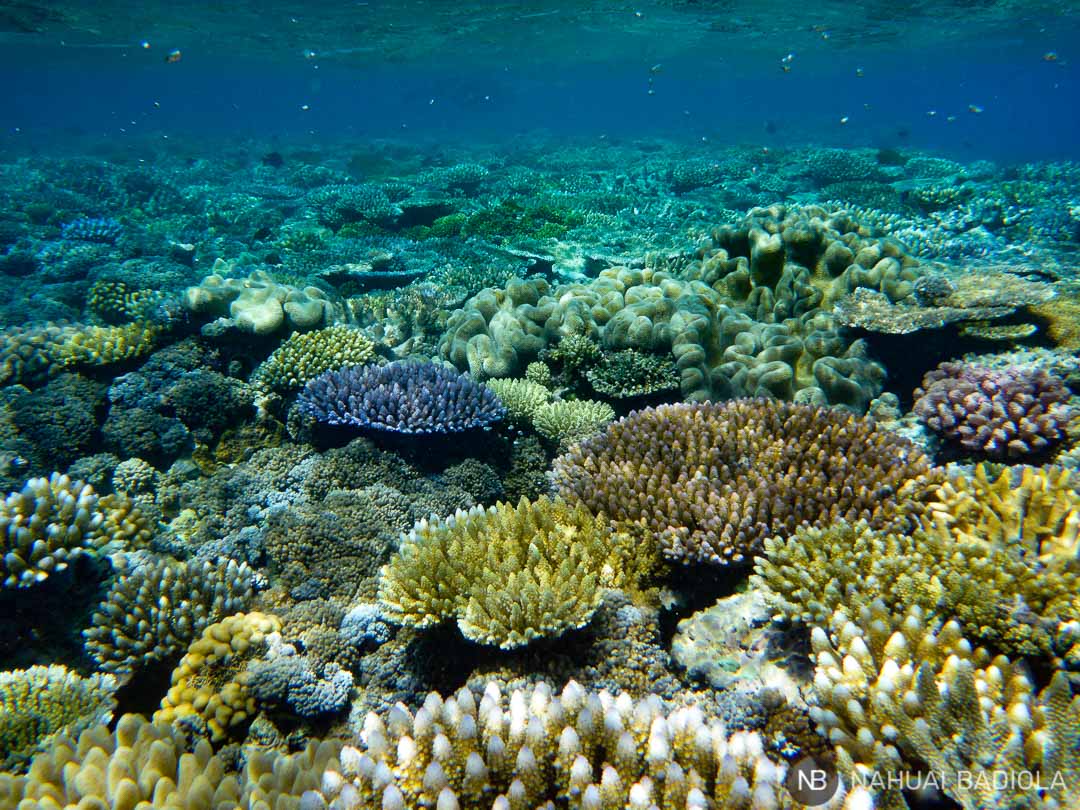
After this first dive, we had lunch on the boat and moved to our second location, 'East Timor', also within Moore Reef. Here, the variety and grandeur of the coral was very similar to the previous spot, although, instead of being mushroom-shaped, it was a very long, irregular wall rising from the seafloor up to the surface.
We loved it: Maori wrasses, reef sharks, parrotfish, clownfish, pilotfish, and a thousand others I wouldn't know how to name. There were areas where you felt like you were in a fish tank, surrounded by fish calmly swimming around you without caring much at all, or even checking you out with curiosity.
The wetsuit we wore was perfect for the water temperature, which was very similar to Upolu Reef. Those who didn't know how to swim were guided along holding onto a lifebuoy, while the rest of us were free to snorkel without wandering too far from the boat, and under the watchful eye of a crew member on deck.
Be careful with the sun, it's very easy to get sunburned, especially the parts exposed at the surface while snorkeling.
On the way back, we were given cake and fruit for an afternoon snack, and we stopped at Fitzroy Island again. In the end, they offered a $50 voucher to anyone who wanted to do a second tour with them. If only we had the time, because otherwise… I wouldn't have thought twice.
The price of this tour turned out to be very affordable compared to the competition. The official price was $150 per person, although that day the company itself had discounted it to $125. However, through 'Happy Campervans', we got it for $110. So I encourage you to wander around and let yourself be approached by the travel agency reps you meet on the street. Ask about the spots or companies that catch your eye; you might find some great deals.

In addition to these two tours, I did a lot of research on offers and spoke with several people who gave me their feedback on companies we didn't get the chance to travel with. Here's a summary of what they told me, but in any case, I recommend comparing this information with other user reviews.
Green Island
There are several companies that will take you either to the surrounding reefs or to the island itself, which is very close to the mainland and specially set up for families with small children or seniors.
Seastar
We were recommended this company, whose boat only takes 35 passengers (it was sold out when we got there) and goes to Michaelmas Reef ($195 per person)
Silverseries
This is a highly rated choice among its customers. It offers two options, one departing from Cairns and another from Port Douglas, though both are accessible via connecting bus services they provide from both towns ($28 extra return).
- Silverswift
Departing from Cairns, they head out to the Flynn and Milln reefs area, among others ($210 per person). We would have loved to travel with them, but the boat was in maintenance while we were there.
- Silversonic
From Port Douglas, they travel to Agincourt Reef, which was recommended to us if we wanted to go scuba diving ($230 per person).
Tusa Dive (T6)
This company visits a large number of destinations on the reef spread across fairly distant areas, such as Hastings and Milln reefs, among others. This, in my opinion, is a huge plus if you're only doing one trip, as they will take you wherever weather conditions allow for the highest possible dive or snorkel quality that day ($200 per person).

Discover Queensland's Tropical Rainforest
There are plenty of options to visit the tropical rainforest from Cairns. In fact, the protected area surrounding it is massive.
To the north, Daintree and Cape Tribulation Rainforest
This is the oldest tropical rainforest in the world, included, of course, as a UNESCO World Heritage site, at around 135 million years old. It is home to a huge number of animal species native to Australia, and some of the most primitive plants known to science have been discovered here.
It sits north of Port Douglas, and you'll find plenty of tour options to visit it, in addition to renting a car and driving there yourself. It is located two hours by car from Cairns.
To the south, Mission Beach
This coastal town boasts a beautiful stretch of beach and is located just under two hours from Cairns by car.
This is the place in Australia where you'll have the best chance to spot a Southern Cassowary, an endangered bird with a prehistoric look; though you might also find one in Daintree. If you're lucky enough to spot them, be careful, as they are aggressive and territorial animals.
To the west, Kuranda and Atherton Tablelands
Just a 1-hour drive from Cairns, you'll find this tropical plateau filled with volcanic lakes, waterfalls, and cascades surrounded by rainforest.
Kuranda is a town in this area that is very popular with tourists. You can get there by taking the 'Kuranda Scenic Railway' or the 'Skyrail' cableway. Around Kuranda, there are several developed trails through the rainforest and various wildlife conservation parks (butterflies, reptiles, koalas…). As I mentioned in the post about Magnetic Island, I'm against caging animals just to look at them, depriving them of their natural habitat, space, and freedom; so we decided to skip this town.
Another reason to skip it was to avoid the crowds of tourists that gather there.
However, we did visit the Atherton Tablelands during our stay in Cairns (the only rainforest trip we had time for) and we did it with the company 'Wait-a-While'. Here is our experience.
Tour with Wait-a-While
This tour is quite pricey compared to similar ones, $199 per person, with lunch included. Although each tour allows up to 11 people, Paul, the owner and guide of this small company, runs the trip every day even if only two clients have booked. So, if you're lucky enough to be the only booking that day (with a travel buddy), you'll get a private tour. And in that case, the value for money is definitely worth it.
In our case, we were a total of 7 passengers, but we had a bit of bad luck when it came to our travel companions. On a nature tour, silence and stepping gently while walking are essential for spotting wildlife. If someone in your group talks loudly and makes noise, your chances drop dramatically. And that was our case.
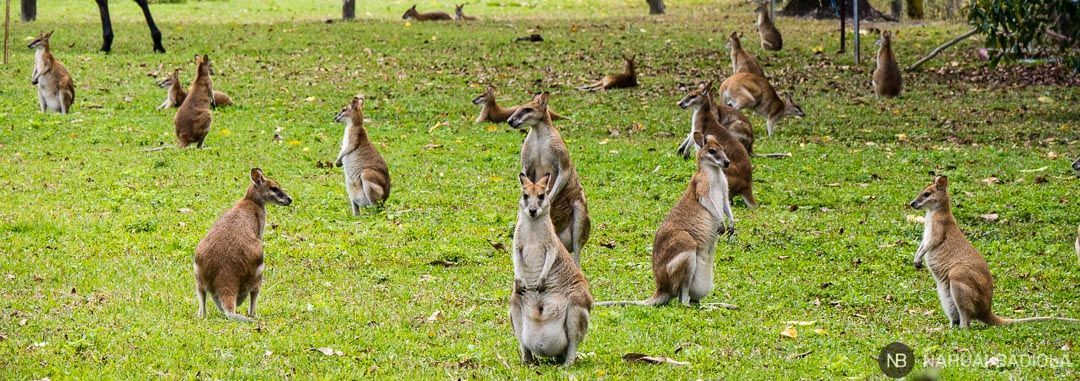
The tour lasts about 8 hours in total, from 14:00 to 22:00. Paul picked us up in his 4WD van at our accommodation between 13:30 and 14:00 and took us south of Cairns first. There we saw a colony of wallabies resting and grazing in the shade on an empty lot in a suburban neighborhood. While we watched them through binoculars (provided on the tour) from a safe distance, Paul shared all kinds of interesting facts and insights about these marsupials.
He also told us about green ants, whose 'bottoms' taste like lemon-lime. And I can attest to that! We also saw a colony of giant fruit bats resting (if you can call the racket they were making resting) in a tree.

After this, we started the drive up to the Atherton Tablelands along a winding 9 km uphill road full of curves (heads up if you get car sick, take precautions).
At the end of this road, we reached 700-800 meters of altitude, where vast green meadows are interspersed with tropical forests, creating beautiful contrasts against the red soil. Throughout the drive, Paul told us about the history of the area and answered our questions.
The next stop was the 'Cathedral Fig', an amazing natural structure formed by a 500-year-old strangler fig.
Next, we parked next to the volcanic Lake Barrine, where Paul treated us to afternoon tea with coffee and biscuits, followed by a short walk through the rainforest (you can see the route on the map at the end of this post). Here we saw lots of birds and learned even more about the forest around us. But, as I mentioned, because of our noisy companions, it was impossible to spot other animals, such as the musky rat-kangaroo, Australia's smallest marsupial.
Next, we went looking for tree kangaroos, which are very hard to spot, and after trying for a while, we managed to catch a glimpse of a female taking a nap in a tree (you can see her yawning in the video). We also tried to spot platypuses in a lovely, idyllic spot owned by an acquaintance of Paul, but none showed up. We tried again near Yungaburra, at Peterson Creek, which is freely accessible (also marked on the map below).
We crossed paths with people who had seen one 5 minutes before we arrived, though it just wasn't our day. Paul was quite stressed about it, as this is one of the main reasons people sign up for his tour. In reality, whenever you try to watch animals in the wild, there's always a chance you won't see them. It's just something you have to accept. According to him, platypus sightings with him are usually successful 90% of the time, so we just got hit with one of those 10% unlucky days.
Then we had dinner (included in the price, except for drinks other than water) at 'Nick's Restaurant', an Italian-Swiss restaurant in Yungaburra. Paul hands you a two-course menu plus a salad starter to choose your options during the drive, and then calls the restaurant ahead. That way, everything is pretty much ready when you arrive.
Dinner was pretty good and plenty filling. I recommend the ribs; however, don't order the hot chocolate for dessert if you want real hot chocolate. It's simply a huge glass of milk with a little bit of cocoa (too little for my taste).
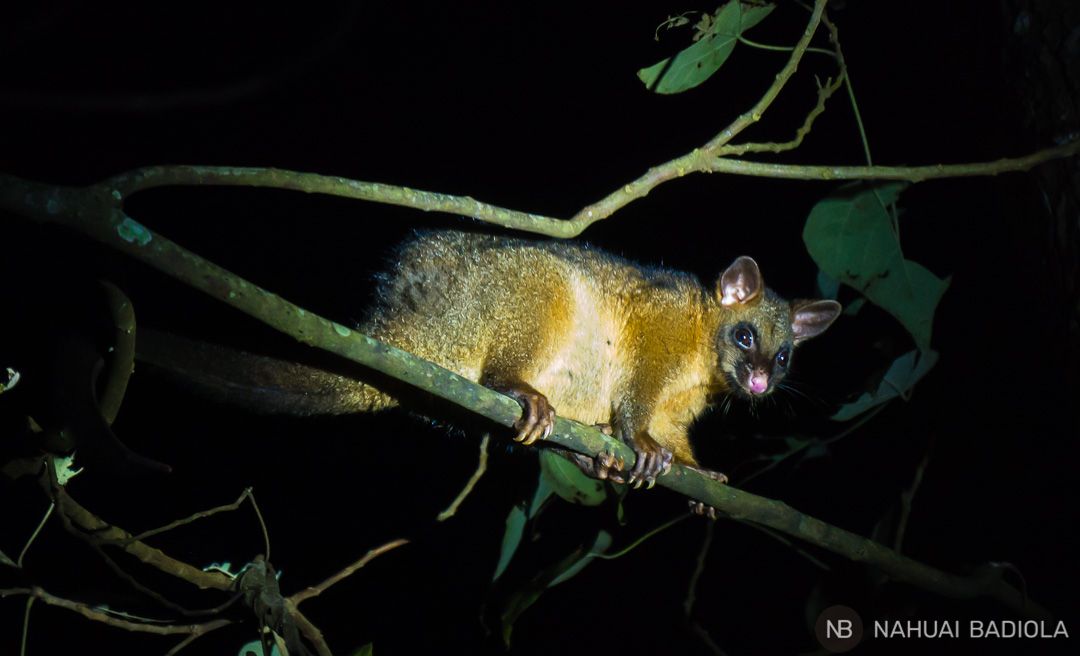
After dinner, we headed to the ‘Curtain Fig’, another spectacularly shaped fig tree. By this point, it was already dark, so Paul guided us with a spotlight.
In the trees around this structure was when we saw the most active animals. And the thing is, when night falls, it's the best time to spot wildlife in their natural habitat. For us, this turned out to be the highlight of the tour. Doing it on your own wouldn't have been possible, since, in order not to disturb the wildlife too much, you need permits to walk through these natural spots at night and shine a light at the animals.
In under 30 minutes, we saw common, coppery, and green ringtail possums (another type of marsupial). And not just a quick glimpse, but unhurriedly munching on tree leaves right before our eyes (check out the videos). It was an absolute treat.
After this, the tour ended and we drove back along the same winding road to Cairns, where Paul dropped us off back at our accommodation.
It's true that almost the entire route can be done independently by renting a car. However, this tour gives you the comfort of being guided, the use of binoculars, a wealth of information about the history of the area, flora and fauna, and a trained eye (Paul's) for spotting elusive wildlife. Plus, the night visit is practically impossible to do on your own.
If you're going to do it on your own, don't touch anything or venture off marked trails into the rainforest. In it, there are plants that can cause excruciating pain, such as the ‘Stinging tree’, which injects potent neurotoxins through its silica stinging hairs. Others can trap you with their hooks, like the ‘wait-a-while’ vine, which this tour company takes its name from.
Where to sleep
Cairns is a town geared toward tourism, and therefore, the accommodation options are vast and varied. For example, on Booking you can find everything from fairly pricey multi-star hotels right in the center, just steps from the Esplanade and the lagoon, to hostels slightly further out where you can share a room and/or bathroom on a tight budget.
We are backpackers, but not hardcore. We really value peace and quiet, getting a good night's sleep and, let's be honest, we've gotten too old for dorms. Even so, the downtown hotels with good reviews in that regard seemed way too expensive for us, so we went with Airbnb.
Specifically, we stayed in the ’Tranquil Inner City Room’ for a week. The house is spacious, clean, comfortable, and has everything you need. It has two rooms for rent (ours was the smaller and cheaper one), and it's shared with the hosts, George and his wife (who was traveling during our stay).
George is nice and respectful of your personal space. The shared bathroom was spotless, and the bed in the room was very comfortable.
It's located about a 20-minute walk from the Esplanade and the lagoon, on a residential street without much traffic or bars. The only issue was that the neighbors kept music playing late into the night. We were so exhausted from the day and the jet lag (Cairns was the first stop on our Australia itinerary) that we fell asleep quickly, though it might bother some people.
Despite this, it's an accommodation I recommend 100%.

A heads-up for anyone looking for a hotel/hostel downtown: On Aspen St., there are 3 huge trees home to a colony of hundreds of giant fruit bats. They are harmless, fruit-eaters, and really fun to watch, but extremely noisy. The hotel right across the street from them gets quite a few complaints from guests because of this, as they can be really annoying and never quiet down, especially at night.
Where to Eat
The dining scene in Cairns is very diverse. You'll mostly find different types of Asian food (due to the proximity to the continent), so if you love this kind of cuisine, you're in luck. Here is a list of the places we tried during our stay, in order of preference.
Bagus Café
This Indonesian bar/restaurant, slightly away from the center (a 10-15 minute walk from the lagoon), is well worth it.
It's a very humble food spot, with outdoor-only seating under a canopy that protects you from the sun. However, the Indonesian food, besides being well-priced, was incredible.
We became addicted to mie goreng (fried noodles with veggies) and nasi goreng (fried rice with veggies) on our trip to Java and Borneo, and I can assure you that the dishes at this restaurant were just as good as in Indonesia. We usually spent $12-$14 per person and, of course, we went back several times.
Khin Khao Thai Restaurant
We loved this Thai restaurant, even though it was on the pricier side of the ones we tried. We paid $25 per person for an appetizer and a main dish. Everything we tasted was delicious, and the portions were generous.
Ganbaranba Noodle Bar
This small Japanese restaurant specializes in ramen and homemade gyoza. Everything we tried was very good.
We ordered gyoza and two ramens (one with pork broth and one chicken/fish), plus all the complimentary green tea we wanted to drink, for $15 per person. Highly recommended if you like this type of food.
Haru
This is a Japanese restaurant where you'll find sushi, sashimi, nigiri… basically, all the Japanese varieties of raw fish. It cost us $21 per person eating without going overboard, but I have to say the quality was great and the cuts of fish were quite large, so we ended up fuller than we expected.

Goong Korean and Japanese Restaurant
This Korean and Japanese fusion restaurant was amazing; however, it's quite expensive compared to the ones mentioned above ($43 per person). It's great for celebrating a special occasion, as you have the option of having the chef cook right in front of you—a real treat (this is an even pricier special set menu). We had a fantastic meal, though, of course, we paid for it.
Grill’d Cairns
If you're in the mood for a burger, the ones at this restaurant right on the Esplanade are delicious. It's a large and fairly bustling place. You order at the counter and then take a seat with your order/table number. Once it's ready, the staff brings it over. We paid $19 per person for a burger plus a drink.
Bobby’s Restaurant
Very budget-friendly Vietnamese fast food ($8-$10 per dish). A great idea is to grab takeout and eat while sitting on the grass around the lagoon.
Salt House
This is a fairly classy bar/restaurant in a prime spot between the lagoon and the marina, and therefore on the pricier side. We didn't try the food; we just had a cocktail each—pretty expensive ($15), but good. What you're really paying for is the location and the atmosphere, which are lovely.
Budget
- Transport: €20 (taxi from the airport, €10/person).
- Accommodation: €372 (€26.6/person/day).
- Tours: €275 (Wait-a-While) + €197 (ReefDay) + €137 (CDC) (€304.5/person).
- Food: 295€ (21€/person/day).
In total, we spent €1,296 over 7 days, or in other words, €92.50 per person per day.
Want to find out about other spots to explore the underwater world on this continent? In the post about our complete Australia itinerary, you have everything you need to get inspired and, depending on what you like, choose your ideal Great Barrier Reef destination.
If you have any questions or need extra details on anything I haven't covered, feel free to leave a comment below. I'll be more than happy to help you out!
Useful links
More information about:
- Flights to Australia: Trabber, eDreams, and Momondo.
- Booking deals.
- 5% discount on your IATI travel insurance.
Australia PDF Guide
Want a PDF with all the Australia articles published on this blog?
You can save it to your tablet or phone and check it whenever you need to. Or even print it out and take it along as your go-to travel guide on vacation.
Sounds good? Then click here to grab it for just €1.95.
Very interesting blog. I'm going in October to spend a month and a half in Australia, starting with Cairns. I booked a hotel in Port Douglas because people who have gone before tell me it's prettier, but after reading your comments, I think I'll stay in Cairns. What do you recommend? Thank you
Hi Amelia.
Thank you so much, I'm glad you're enjoying the blog. 🙂
I don't think Cairns is prettier than Port Douglas. In fact, Cairns isn't a pretty city as such.
What I liked most about being there was the wide range of tours to the reef (that's the truly breathtaking part). However, I'm sure that from Port Douglas you can reach stunning parts of the reef that I would have loved to visit too, but you can't do it all. 🙂
And since I didn't visit Port Douglas, I can't really comment on whether it's pretty or not, or recommend one town over the other.
There's one thing I'm sure of: no matter where you stay, Cairns or Port Douglas, you're going to love the reef right off this coast. 🙂
Best regards and have an amazing trip. 🙂
Hello
first of all, congrats on this excellent blog.
I arrive in Cairns on the last Monday of November and fly back to Sydney early on
Saturday morning… is there enough time to visit Whitehaven Beach? It's 5 days, what do you think? When I booked the flight, I didn't realize the distance between Cairns and Airlie Beach was so big.
Any suggestions are welcome, thanks and congrats again
Hi Caso Benson
To be honest, it sounds a bit tight to me, but if you're willing to buy 2 more flight tickets, theoretically, yes, you could do it: 2 days in Airlie Beach, 3 in Cairns. Personally, I would enjoy the Cairns surroundings more, visit Cape Tribulation, and do several dives from there. But, of course, that depends on how much you want to see Whitehaven Beach.
Either way, you're going to love it. Enjoy it!
I want the pdf!! I'm going to Australia
Loud and clear! I'll send it via newsletter as soon as I have it ready. 🙂
I want the PDF! I'm going to Australia in two months and I love your blog. Thanks so much for the info, it's really useful!
Hi María, thanks so much for your kind words!
I hope to have the PDF ready by then. Keep an eye on the page to find out when I publish it, or sign up for the newsletter and I'll let you know by email, whichever you prefer.
A big hug and, if we don't talk before, enjoy Australia! 🙂
I want the PDF! Everything you share sounds wonderful, and it's helping me so much to plan my trip. Thanks a million!
Hi Beatriz! Thanks a million for leaving your comment. I'm so glad the blog is helping, it's such a pleasure to hear that! As soon as I get a bit of time, I'll prepare the PDF for you all. Big hug and happy travels!
Great report and fantastic photos! It makes you want to go right now!
Thanks, Shelldu. I'm so glad you liked the report. No wonder you feel like going… Go for it, don't overthink it, go! You won't regret it. Big hug! Celi.
Hi ! I'd really appreciate some guidance , unfortunately our travel dates are in January and I'm terrified of the jellyfish risk.
On the other hand, if we go to Cairns, besides the Great Barrier Reef, is there a koala sanctuary or something similar to visit? We're going for very few days (10) , what would be best ,
Thanks!!
Hi, Ali.
Don't worry about the jellyfish. If there were jellyfish around, tours for travelers like you and me would take you where the danger of finding them is lowest (the reef is huge, and jellyfish gather in specific areas depending on the time). Plus, they'll give you stinger suits if needed. Nowadays, traveling with professionals, an accident is very unlikely; you can go with peace of mind and just follow their advice on what to wear and how to act once you're there.
I don't know of any koala sanctuaries in that area, but I haven't looked for one either, sorry! To see animals in the wild (not koalas, but wallabies and others), I recommend the tour we did. Maybe near Cape Tribulation, a bit further north, there's something, or you could do other types of day trips.
10 days around Cairns gives you plenty of time. I'm sure you're going to love it. And don't be afraid. Choose a reputable boat tour agency, follow their instructions, and nothing will happen. You'll just have an amazing few days. 🙂
Big hugs and have a wonderful trip!
Awesome Celi. Very approachable, practical, and thorough info. Thanks.
Thank you! I'm so glad you liked it.