
Lanzarote, one of the Canary Islands, captures everyone's heart with its beautiful beaches, black lava fields, and living volcanoes that offer truly magical views.
- If you enjoy good weather and love beautiful beaches, Lanzarote is the place for you.
- If you want to go to a magical place where the earth radiates peace, warmth, inspiration, and space to grow and create, Lanzarote is your place.
- If you love art and nature blending into a single entity, Lanzarote is your place.
- If your passion is hiking, taking in unique, almost Martian-like landscapes.
This is your place.
Got a few days off? Don't miss this wonderful island.
Just one warning: your first visit will never be your last. Once you experience it, you'll only dream of coming back.
How to get to Lanzarote
The easiest way to get to Lanzarote is by plane.
Several airlines (Vueling, Ryanair, AirEuropa, Iberia, and Binter, among others) offer direct flights to Arrecife airport from various points in Europe, the Iberian Peninsula (Barcelona, Madrid, Seville, Malaga, Asturias, Bilbao, and Santiago), and even from other Canary Islands like Fuerteventura, Las Palmas de Gran Canaria, or Tenerife.
Don't have your flights yet? I recommend booking yours 3 to 4 months in advance (for domestic flights) or 6 to 8 months ahead for international flights.
I always start my search on Trabber because the price shown is final (it includes card fees and other taxes). That said, I always compare results with eDreams and Momondo.
You never know who will have the best deals. 😉
If you're in Fuerteventura, it might be convenient to take a ferry that connects the two islands in about 30 minutes between Corralejo and Playa Blanca. You can also easily reach it from other islands in the archipelago, although the journey is longer and depends on which island you're on.
How to get around the island
Lanzarote has a spectacular landscape that's well worth exploring, whether on foot, by car, or by scooter.
I don't know if you remember that car commercial asking… Do you love driving?
Well, on this island, you'll be able to proudly answer yes to that question, no matter what car brand you drive. There are cheaper local car rental agencies (in my experience), such as Cabrera-Medina, Cicar, or AutoReisen, all with counters at the airport.
When to go
Lanzarote has a mild climate, with very little rainfall, mostly concentrated in the winter months, and pleasant temperatures all year round, with highs of 29ºC in summer and 21ºC in winter.
Winter nighttime lows don't drop below 13ºC, while in summer they hover around 21ºC.
The wind is usually strong, and there are two distinct climate zones on the island: the north tends to be cloudier than the south.
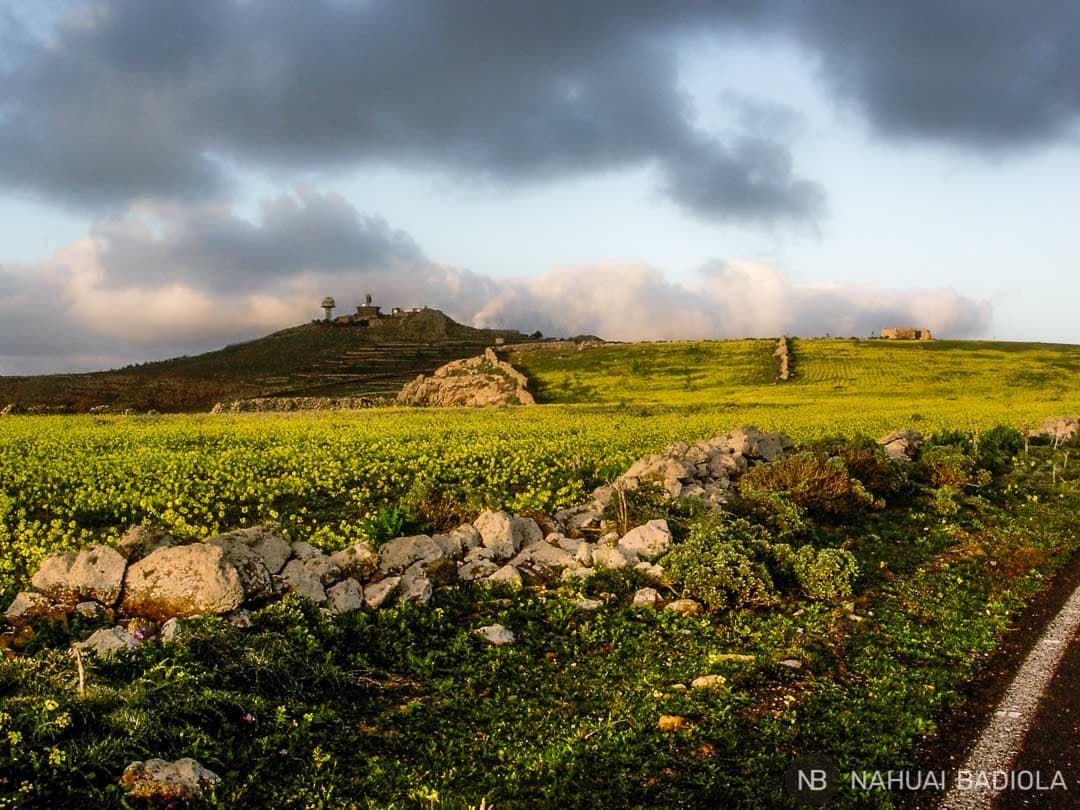
We have visited this island on 3 occasions: 2008, 2012, and 2013, but always during December or January.
Despite it being winter, we've always been able to enjoy great beach days. Mind you, the Atlantic Ocean off the coast of Lanzarote is pretty cold that time of year.
Beaches
On this island, you'll find beaches for every taste: wild, secluded, with white or black sand, windy…
Here are my personal favorites.
Famara
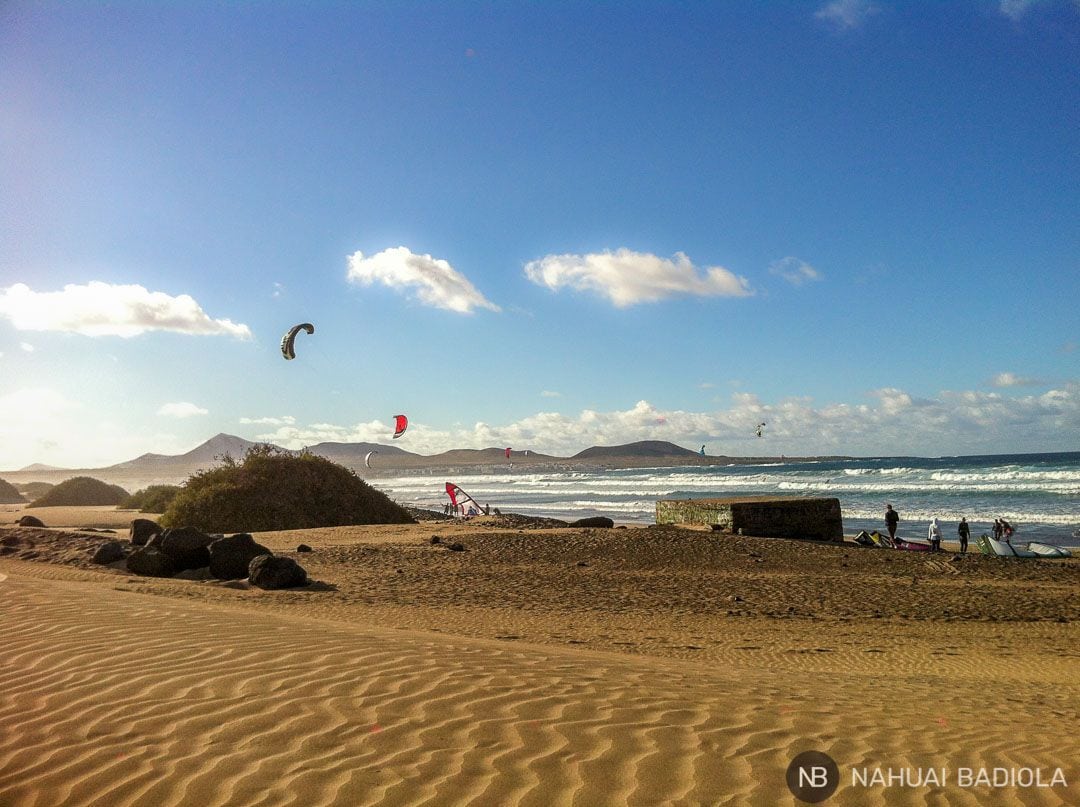
This is, hands down, my favorite beach in Lanzarote, the most beautiful on the island.
It's a windy coast in the northwest of the island that's a true paradise for surfers, windsurfers, and kitesurfers.
It sits at the foot of a gorgeous cliff. If you hike up to Risco de Famara (marked on the map at the end of this post), you'll enjoy breathtaking views of it.
Even if it's cold or windy, taking off your shoes and enjoying the gentle massage of Famara's sand along its nearly 6 km length is an absolute delight.
If you want to sunbathe, you can shelter from the wind behind a dune or inside a stone semi-circle or hollow dug into the sand. In these shelters, totally protected from both the wind and prying eyes (unless someone peeks over the edge), many people take the chance to sunbathe in the nude.

Papagayo Coast
Thanks to its location at the southern tip of Lanzarote, this coastline enjoys the best weather on the island.
Plus, with plenty of coves facing both east and west, it's always easy to find a spot to enjoy a sunny day without dealing with the strong wind.
Among its coves, which stretch along 2 km of coastline, you can find Mujeres Beach, Caleta del Congrio, and Papagayo Beach.
Thanks to their size and secluded nature, big crowds are rare, so you can enjoy them in total peace.
You can get there on foot from a nearby residential area east of Playa Blanca, or drive into the area by paying around 3 euros. Once inside, you can park your car in one of the 2 parking areas next to Mujeres Beach, the one near Papagayo, or the one at Caleta del Congrio.
I recommend bringing food and drinks with you.
La Graciosa
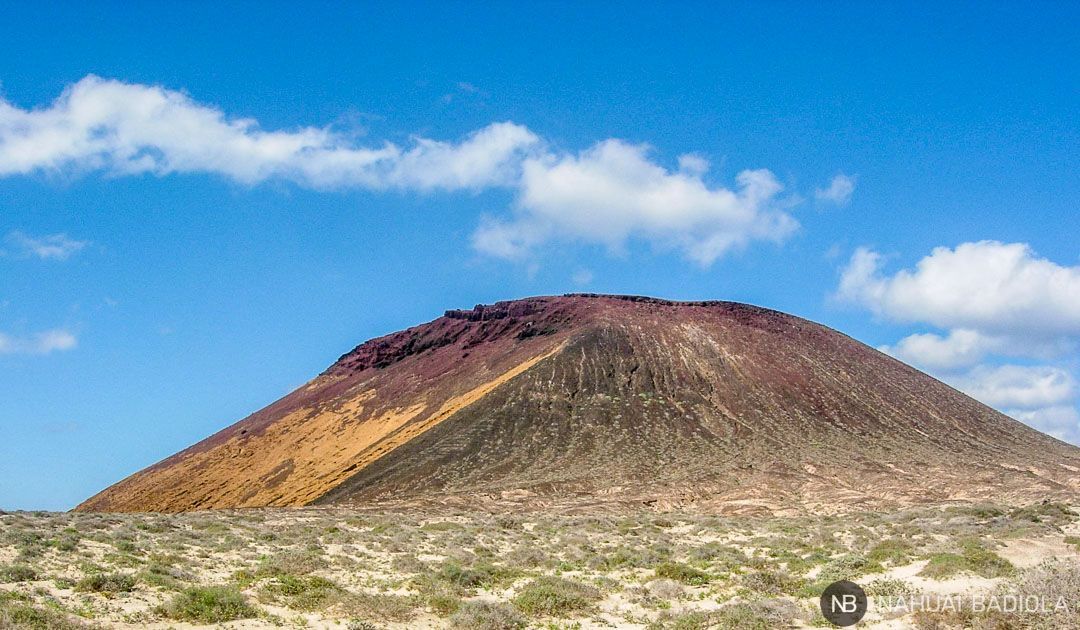
La Graciosa is a small, car-free island north of Lanzarote.
You can get there in just over 30 minutes by taking a boat in Órzola (check the map at the end of this post). You can find the timetables here, and the round trip costs 20€.
The main town in La Graciosa is called Caleta del Sebo. This is where the boat will drop you off.
Once there, you can explore it on foot or by renting a bike.
You'll see how the deep blue sea contrasts with virtually deserted golden beaches, set against a backdrop dominated by red, yellow, and green volcanic structures.
Pack your backpack with water and some food, and… enjoy the day!
Places of interest
A part of Lanzarote's immense beauty, almost as important as its volcanic nature, is the work of the Lanzarote-born artist César Manrique.
With his passion for integrating works of art into the natural surroundings, he managed to create true wonders well worth visiting all over the island.
Tickets for some of these sights are included in combined passes that you can buy right at the ticket office of the first tourist center you visit. If you plan to visit all the centers included in one of the passes, I recommend getting it, as you'll save quite a bit of money. You can find more info about them here.
El Mirador del Río (4.5€)
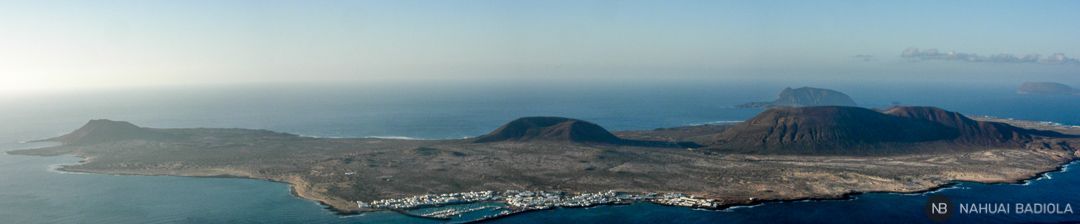
This viewpoint sits in a prime spot at the very top of the Famara Massif. From here, you can take in spectacular views of Lanzarote and La Graciosa.
It's totally worth it.
Los Jameos del Agua (9€)
This is the first artistic and tourist center created by César Manrique, and a clear example of harmony between nature and art.
It's located inside a volcanic tube formed by an eruption of the La Corona volcano.
‘Jameo’ means a hole in the ground, and ‘del agua’ comes from the freshwater lake inside, which is home to a protected species of blind white crab, endemic to Lanzarote.
La Cueva de los Verdes (9€)
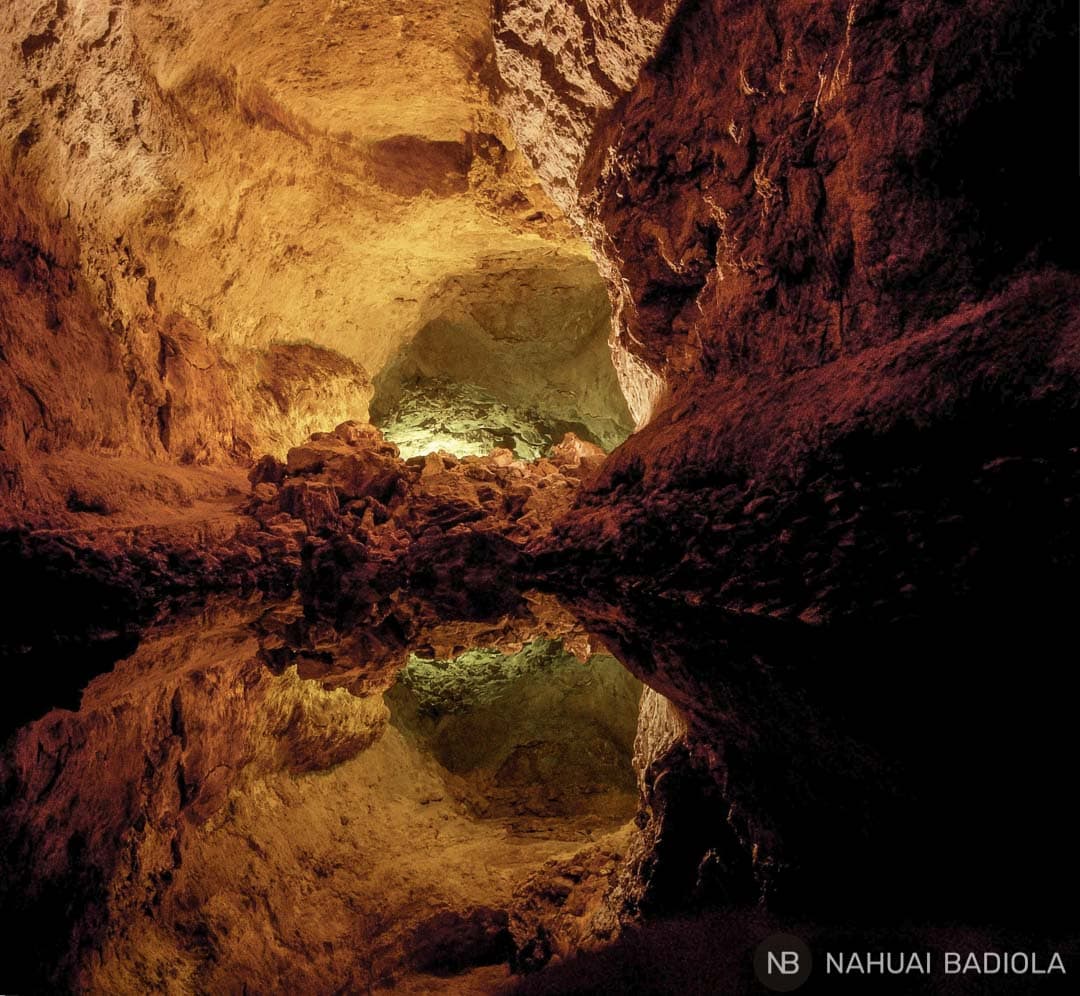
Just like Los Jameos del Agua, this cave is located inside the volcanic tube created by an eruption of the La Corona volcano, which stretches for more than 6 km from the volcano out to the sea.
The visit takes place in small groups with a guide. This natural work of art, along with all the facts and fun trivia shared by the guide, makes for one of the most beautiful tours on the island.
The Cactus Garden (5.5€)
Here you can find more than 1000 different species of cacti from all over the world.
César Manrique Foundation (8€)
Located in Taro de Tahíche, this foundation is housed in what used to be César Manrique's own home.
It's a stunning structure built over a sea of lava and several volcanic bubbles.
It's a magnificent example of how to use the beauty of the landscape to elevate a work's artistic value. A must-see.
El Charco de los Clicos (free)

This pond or green lake is located inside an old crater open to the sea called El Golfo.
It features a gorgeous black sand beach and, inside, a bright green lake, colored by the vast amount of microorganisms and suspended algae.
Swimming is not allowed, but it's an absolute treat to visit. The color contrasts look like something straight out of an artist's palette.
In the village of El Golfo, you'll find plenty of restaurants serving delicious fresh fish. If you're in the area, go for it!
Los Hervideros (free)
This cliffside coastal area, south of El Charco de los Clicos, was shaped by caves and bubbles from volcanic eruptions.
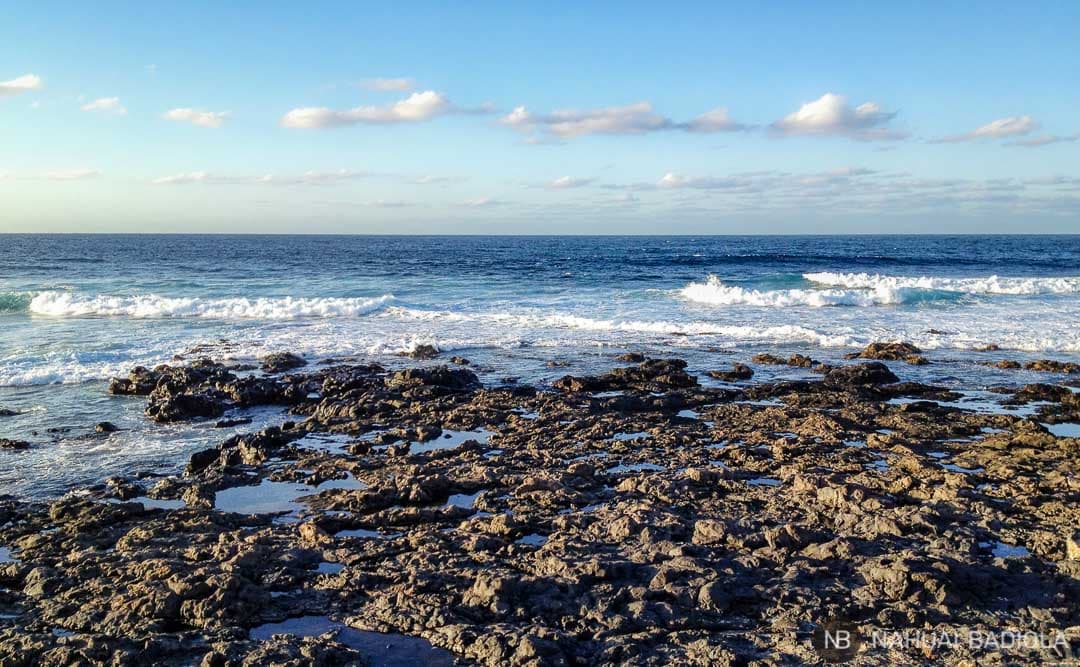
Thanks to the strong waves here, strolling along the paved paths and peering through the rock openings to watch the sea battle for space against the land becomes quite a show.
Don't miss it on windy days.

Volcanoes and hiking
In general, keep in mind that when hiking on your own through the volcanoes of Lanzarote, you won't find anywhere to stock up on food or water, so remember to go prepared.
Also, at the top of the volcanoes the wind tends to be stronger and colder, so you should pack some kind of windbreaker.
There's no shade to take cover under either, so bringing sunglasses and a cap or hat will be a lifesaver.
And most importantly, make sure you wear good footwear for walking across these landscapes. Due to the abrasive nature of this volcanic terrain, if you tackle several trails you'll end up burning through the soles of your sneakers. Personally, I recommend wearing hiking boots, which have a harder and tougher sole.
You might find it useful to download hiking trails across the volcanoes of Lanzarote on Wikiloc. There you'll find the ones I detail below, plus many more.

Timanfaya National Park (9€)
Its entrance is marked by the Fire Mountains Devil, designed by César Manrique.
When you arrive at the natural park, follow the road to Islote Hilario and leave your car in the parking lot you'll find there (you can't miss it).
After buying your ticket, hop on one of the buses that run the “Volcano Route”, which is included in the admission price.
The itinerary, about 14 km long, takes you past several of the park's main volcanic structures and highlights, while the guide shares details about the history of the different formations, volcanic bombs, flora, and local wildlife.
When we last visited in 2008, the bus windows weren't quite as clean as we would have liked for taking photos. Even so, the landscape is breathtaking and well worth seeing.
At Islote Hilario, you'll find El Diablo restaurant, which features a natural grill where they cook food using the heat emanating from the belly of these fire mountains.
The food itself isn't spectacular, but the setting is wonderful.
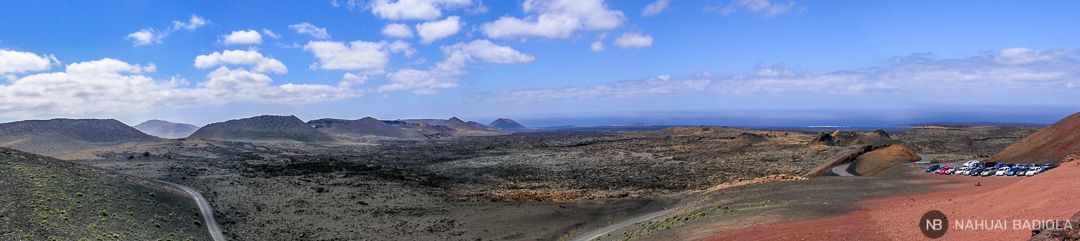
You can't visit Timanfaya National Park on your own, but if you're keen on hiking through it, you can book a guided tour across the park at the Mancha Blanca Visitor and Interpretation Center, either by phone or by requesting an appointment via email.
You can choose between 2 options: the Termesana route, lasting about 2 hours and covering 3.5 km with low difficulty; and the Coastal route, with maximum difficulty and around 10 km long. You can find more info in this brochure.
Update, September 2017: My sister did both guided routes through the park without booking in advance (it was an impromptu trip). As she told me, the trick is to show up at the visitor center doors an hour before the tour departs. If someone with a reservation doesn't show up, they assign spots on a first-come, first-served basis that morning. Apparently, it's quite common for 1 or 2 spots to open up right then.
So, if you don't get a spot by email, don't lose hope! By the way, she loved both experiences.
Corona Volcano
You can leave your car in Ye, right next to the trail entrance or anywhere else in town where you can find parking.
It's a 1.5-km walk up to the volcano's crown.
Most of it is flat, crossing fig orchards and vineyards along a clearly marked path. At the end, you'll reach the climb up the volcano's slope, which isn't too steep.
If you make it to the cliff edge I've marked on the map, you'll enjoy a gorgeous panoramic view of the surroundings.
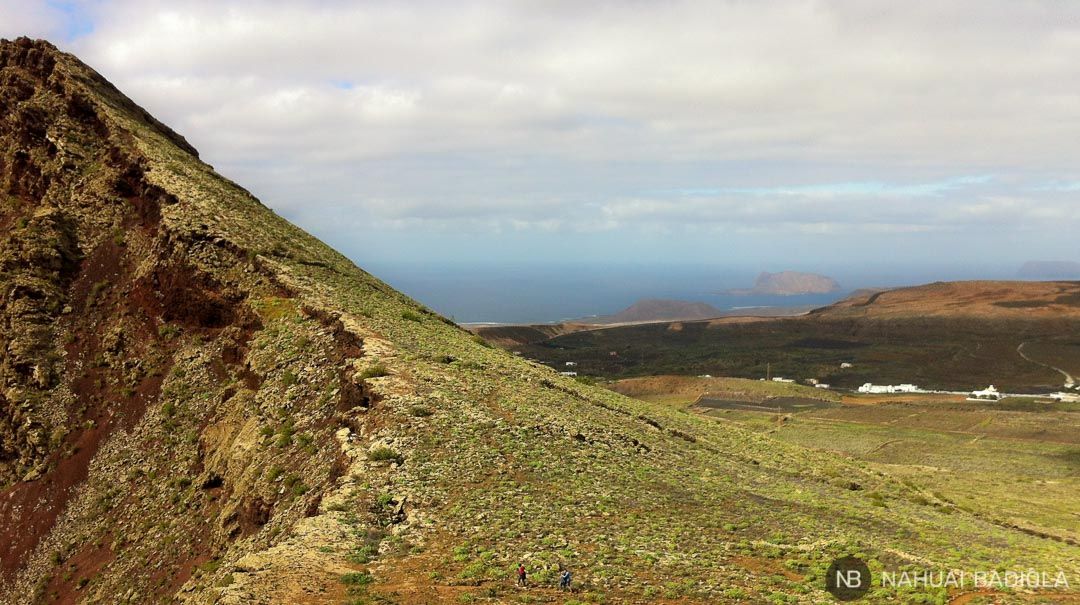
You can walk around the circumference of the volcano (another 1.5 km), although this is quite more demanding than the simple climb up, as the trail is steeper and more dangerous.
You can also hike down into the volcano, but just a heads-up: climbing back out isn't easy. You'll need to scramble using your hands for most of the ascent.
El Cuervo Volcano
A very easy trek. You can park on the road, right next to the entrance you can see on the map.
It's 1.2 km to the crater opening, which you can walk right into.
Although there are some paths worn down by visitors circling the rim, you generally shouldn't climb up there.
Caldera Blanca Volcano
Leave your car in the parking lot you'll find as you exit the town of Mancha Blanca (point A on the map at the end of this post).
An easy, flat trail reaches the base of Caldera Blanca volcano in 3.5 km.
Halfway through, you'll pass by another smaller volcano with an opening you can easily wander into. All around you, a spectacular sea of black lava fills the landscape. It's a truly unique experience.
Once you reach the foot of Caldera Blanca, you climb the 300-meter slope up to the volcano's rim and choose between walking the full circumference (3.5 km) or just part of it.
We took the shorter route to another descent point (1 km), as you can see on the map route. However, the whole rim is walkable, and the views from there are breathtaking—don't miss them.
Update April 2016: My parents hiked the entire circumference and told me this trek was the most incredible experience of their trip to Lanzarote that year (which, again, won't be their last).
I also suggest keeping an eye on the ground; you'll spot gorgeous rocks streaked with olivine. Don't take anything with you—just enjoy their beauty as the sunlight hits them.
This is a long hike that deserves to be savored, so it's best to set aside a full day for it, start early to make the most of the daylight, and have lunch halfway through at the top of the volcano.
Can you think of a more magical plan than this?
Montaña Roja Volcano
It's the southernmost volcano in Lanzarote.
You can park near the trailhead marked on the map at the end of this post, right by some antennas in Playa Blanca.
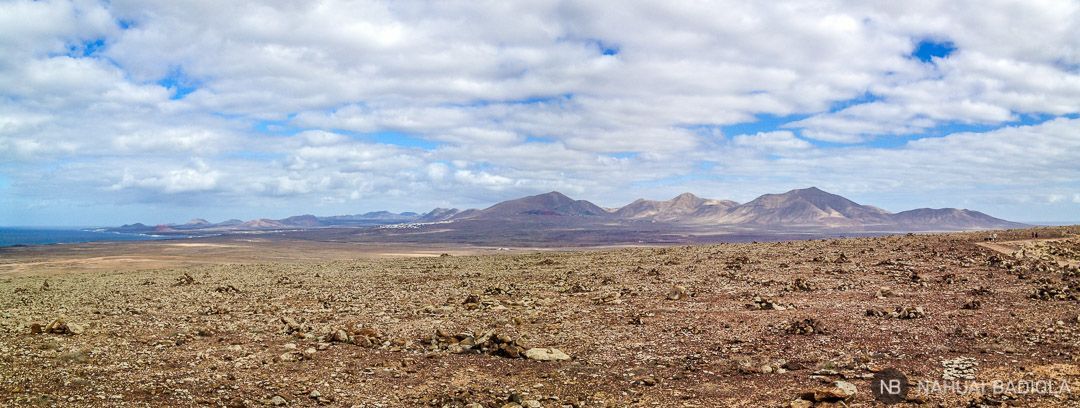
Its circumference is 1.5 km and features a climb of about 300 meters, which isn't very demanding. You can easily walk into the volcano's crater and hike all the way around the rim, enjoying spectacular views of northern Lanzarote, Playa Blanca, Montaña Roja, and even Lobos Island to the south.
Where to Eat
You can find great homemade Canarian food at any restaurant in Lanzarote.
I recommend ordering ‘papas arrugás’ with green or spicy mojo sauce and trying the fish, which is always fresh and delicious.
Here are a few of my favorites:
Restaurante Hespérides – Casa León
This restaurant is delightful. Not only are the dishes exquisite, but the interior is super cozy and the owners are lovely.
It also has a little shop with organic products. Don't miss it.
It's located in the center of Teguise, one of my favorite towns on the island. It hosts the island's biggest street market every Sunday morning. It's well worth a stroll.
Restaurante Sol
Located in Caleta de Famara, this spot is perfect for recharging your batteries after a day at the beach.
I especially recommend the desserts—they're so good that I'd sometimes go to this restaurant just for an afternoon treat.
Restaurante Amêndoa
This restaurant, located in La Santa, features a menu packed with creative and delicious dishes, though it's not particularly cheap.
That said, the value for money is great; I loved it.
Restaurante Las Tres Lunas
In Punta Mujeres, right near the sea, this restaurant serves up amazing fresh fish dishes.
Restaurante Balcón de Femés
As its name suggests, it's located in the village of Femés.
Perched at the very top of the village, it boasts gorgeous views of the area. Perfect for dinner or a drink while taking in the sunset.

Where to sleep
There are endless wonderful options on this island, from large luxury hotels in more touristy areas like Playa Blanca to apartments in quieter, more secluded spots, whether right on the coast or inland surrounded by volcanoes.
We've always stayed in oceanfront (though not beach-facing) rental apartments in the town of La Santa.
Waking up to the sound of the ocean carving away at the volcanic rock, just a few kilometers from Famara, what more could I ask for?
On future visits, I'd love to know what it feels like to wake up surrounded by volcanoes and lava fields, for example in places like this one.
I'd like to highlight the Hotel Costa Calero Thalasso&Spa. Although I've never stayed there, I have visited its spa many times (€18 per person). It has great facilities, some of them outdoors, which makes them even nicer.
If you feel like relaxing, I highly recommend them.
In short, Lanzarote is a perfect island to spend a few days enjoying gorgeous beaches, volcanic landscapes, and artwork seamlessly integrated into nature.
A rental car, a windbreaker jacket, a backpack, and good footwear. You won't need much else.
Just remember, once you experience the magic of this land of fire, you'll be hooked on its magnetic pull forever. Be prepared, because leaving it always hurts…
If you have any questions or doubts, or need extra details I haven't mentioned, leave me a comment below. I'll gladly help with anything I can.
Useful links
- Accommodation in Playa Blanca.
- Other hotel deals in Lanzarote.
- Flight deals to the Canary Islands: Trabber, eDreams, Momondo, and Vueling.
- 5% discount when booking your adventure travel insurance with IATI.
- Sleep in a Canarian cave house with views.
Road tripping through the Canary Islands? Check out these posts:
- Sleep in a Canarian cave house with views of the Barranco del Sao.
- Circular hike in Gran Canaria: Bentaiga-Cuevas del Rey-La Solana.
- Trail from Artenara to Cuevas del Caballero and Los Candiles.
What beautiful Canary Islands we have! This one in particular is unforgettable. Thanks for the tips that helped me enjoy it even more thoroughly the second time around. I recommend completing the archipelago little by little… You won't regret it. That way I can keep following your valuable advice. Hugs.
Haha! Thank you so much for your comment, Mari. And for your advice, which I definitely plan to follow to the letter. 🙂 Traveling across all the Canary Islands is on my bucket list, and something tells me it won't be long until that dream comes true… Of course, I promise to update the blog with all the info I gather as soon as I do. Hugs.