
A gorgeous medieval historic center, one of the oldest universities, and some of the best food in Italy. What are you waiting for to discover Bologna?
Why visit Bologna
It might not be one of the country's most famous capitals. However, its streets hide hundreds of curiosities just waiting to be discovered.
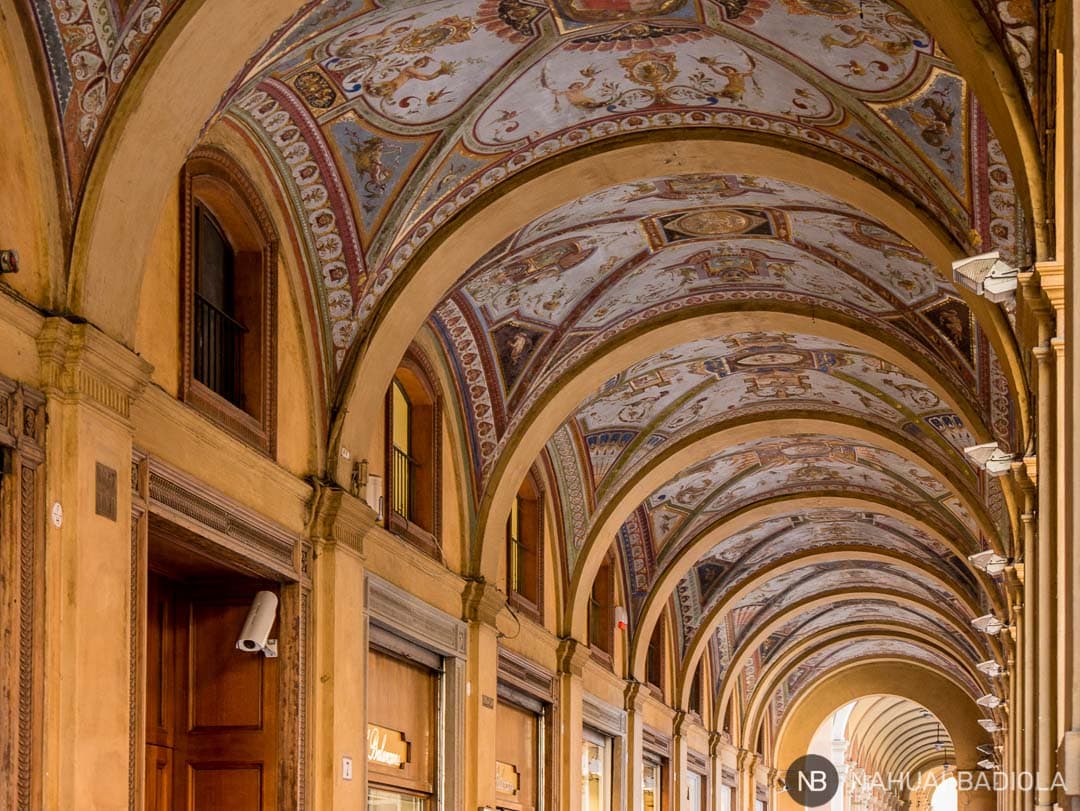
Stroll along its more than 40 kilometers of porticoes, sheltered from the sun or rain, taking in their endless differences. Arches, colors, mosaics, busts, columns, reliefs… It is impossible to pick a favorite walkway.
And sheltered beneath them, hundreds of traditional shops serve up some of the most beloved food in all of Italy. Mmm… getting hungry?
Well, don't stop just yet, because at the end of this street, one of its squares appears, crowned by a unique church unlike any you have seen before. Or maybe you'll find historic buildings, or some of its medieval towers braving the test of time.
Don't be afraid to let your feet or your eyes guide you; every corner has the potential to make you fall in love. But don't worry, you won't get lost.
Along the way, you'll discover a bustling, lively city, powered by the incredible social life brought by thousands of students, locals, and travelers.
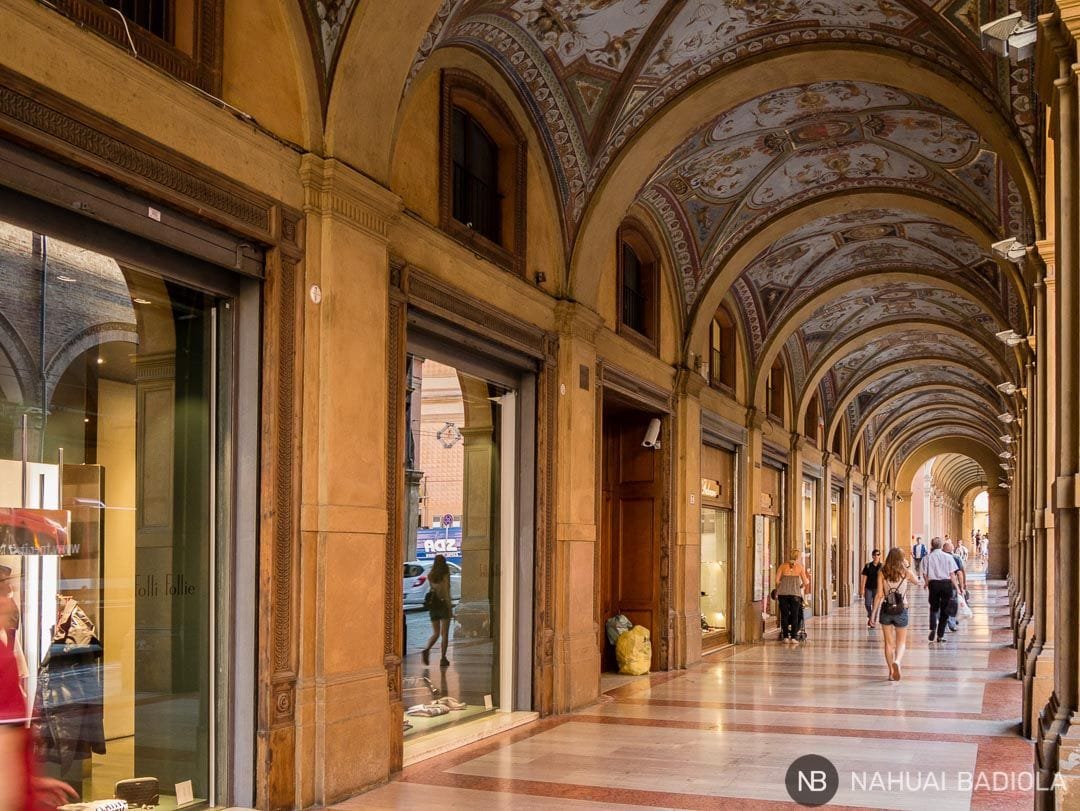
It is often described as la dotta, la grossa, la rossa; or in other words: the learned, the fat, and the red.
- La Dotta refers to the fact that its university is one of the most prestigious and oldest in the world. For instance, in the Archiginnasio library you can visit the first anatomical theater where human anatomy classes were ever taught.
- Grossa points to its delicious culinary tradition, although basing your entire diet on it might not be the healthiest choice. It is packed with meats and pastas, while a bit light on veggies and legumes. There are dozens of traditional dishes you'll love. In particular, Bolognese locals are especially proud of their mortadella and Parmigiano cheese.
- La Rossa comes from the color of its rooftops and some of its buildings. The best way to take in this sight is by climbing one of the medieval towers that still stand today. The most famous are Garisenda and Asinelli, the true symbols of Bologna.
What to see
Below, I'll share the spots that caught my eye the most during our visit. But remember, don't limit yourself to just these.
Take your time to wander around and discover hidden corners unknown to most tourists.
Step off the beaten path and soak up its medieval charm.
Grab a beer in a piazza, pop into a traditional food shop, chat with the locals…
And fall head over heels for this gorgeous Italian city.
Porticoes
The more than 40 kilometers of porticoes lining its streets make wandering beneath them one of the best ways to experience Bologna.
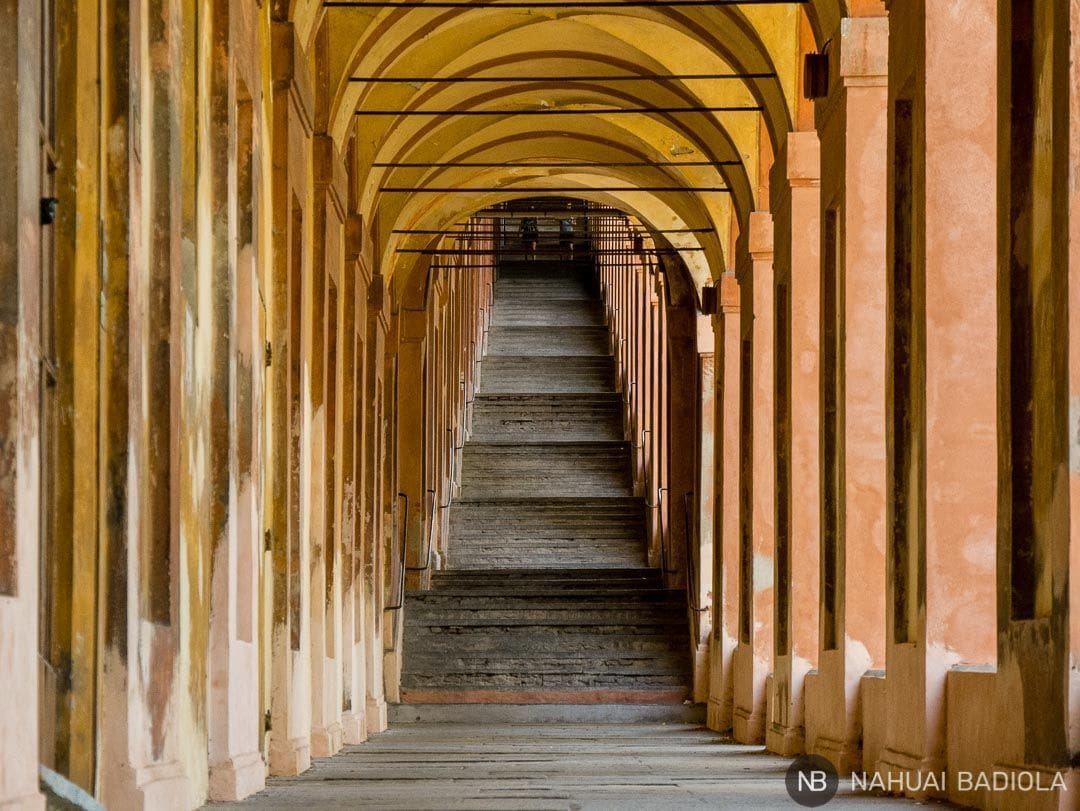
When its famous university was founded, the huge influx of students forced the construction of new spaces to house them all. So, they started building upper-floor rooms that extended out over the street.
To avoid taking away space from pedestrians, they always built them with porticoes underneath to keep foot traffic flowing smoothly.
And… voilà!
That is how this capital became the city of porticoes.
Every single one is different from the next, so lace up some comfy sneakers, and… get ready to explore them!
Sanctuary of the Madonna di San Luca and Via San Luca
The most impressive portico-lined street is the Portico di San Luca.
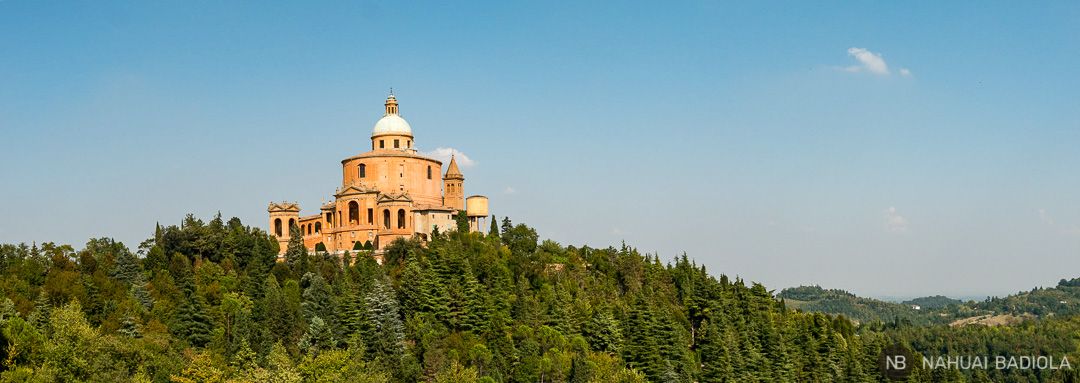
It features 666 arches and stretches over 3.5 kilometers uphill, connecting Bologna to the Sanctuary of the Madonna di San Luca.
Along this route, you'll see plenty of runners and walkers at any time of day. Just be prepared for stairs and steep slopes, as there is an elevation gain of around 300 meters between the city and the sanctuary.
Fountain of Neptune
This fountain is one of Bologna's iconic landmarks. You'll find it right in the center of Piazza Nettuno, right next to Piazza Maggiore. Honestly, they are so close together that they feel like the same square, so you can't miss it.
After it was built, the Church forced the sculptor to shrink the size of the statue's manhood, deeming it indecent.
As a clever bit of revenge, the artist tweaked the design so that from a specific angle, Neptune's outstretched thumb looks like an erect phallus. If you stand right in front of the entrance to the Salaborsa building, you can see this cheeky perspective for yourself.
The fountain was covered for restoration work during our visit, so we couldn't see it with our own eyes.
Basilica di San Petronio
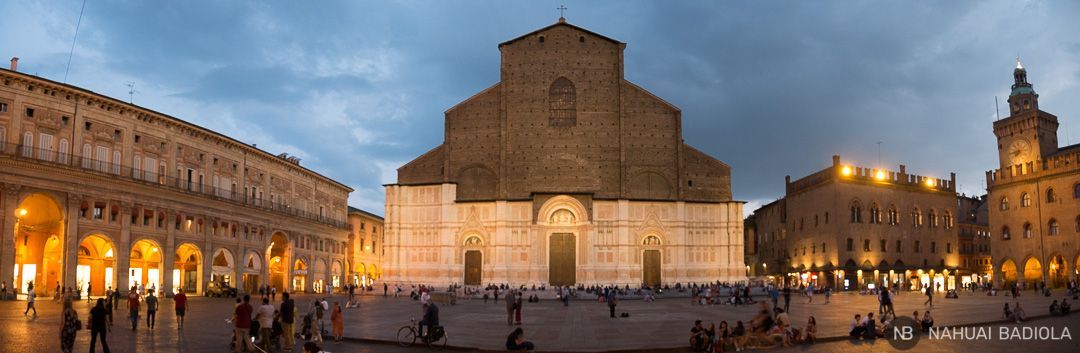
This is Bologna's most famous church, dedicated to the city's patron saint. It's not for nothing that it's located in Piazza Maggiore, right in the heart of the center. Even so, admission is free.
Originally, this temple was designed to be the largest in all of Italy, surpassing even St. Peter's Basilica in Rome.
In order to prevent this, a papal decree ordered the construction of the Archiginnasio on part of the land intended for it.
Its construction spanned several centuries, and as you'll notice, the facade decoration was never finished.
Archiginnasio
This palace is one of the most significant, as it was the seat of the University of Bologna.
Inside, you'll still find the so-called anatomical theatre, an amphitheater-shaped room where human anatomy classes were taught.
It was destroyed during World War II, so what you see today is a reconstruction.

The building is decorated with nearly 6,000 coats of arms, many of which can be seen right as you walk in, all along its inner courtyard. Today, it houses a library.
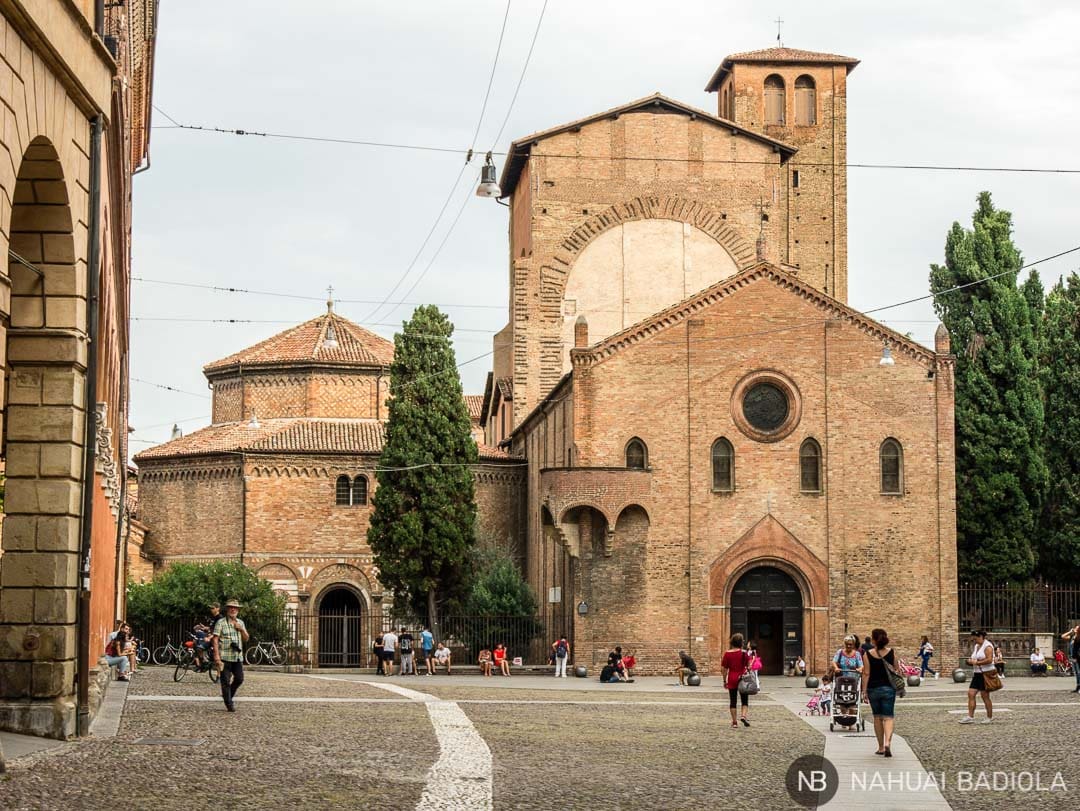
Basilica di Santo Stefano
In reality, this curious church is made up of 7 independent temples. Don't miss it.
Plus, it's located in one of the city's most beautiful squares, with which it shares its name.
As a fun fact, here you can walk through the Corte Isolani, a passage crossing a complex of restored palaces, now occupied by dozens of shops and restaurants.
You'll also see the famous Salina Palace, on whose facade the head of the devil himself is hidden among the faces of the family that originally inhabited the building.
It makes the architect's lack of fondness for them pretty clear.
The Two Towers: Garisenda and Asinelli
Out of the more than 100 towers that once populated Bologna, only 24 are still standing.
Garisenda and Asinelli are the most famous and are symbols of the city. They take their names from the families who commissioned their construction.
The size of the Garisenda tower is smaller than it originally was. It tilted and had to be shortened after its foundations gave way.
Asinelli is the taller of the two (over 90 meters). For 3 euros, you can climb its 498 steps to gaze at the red rooftops from above. The views are well worth it.

Where to Eat
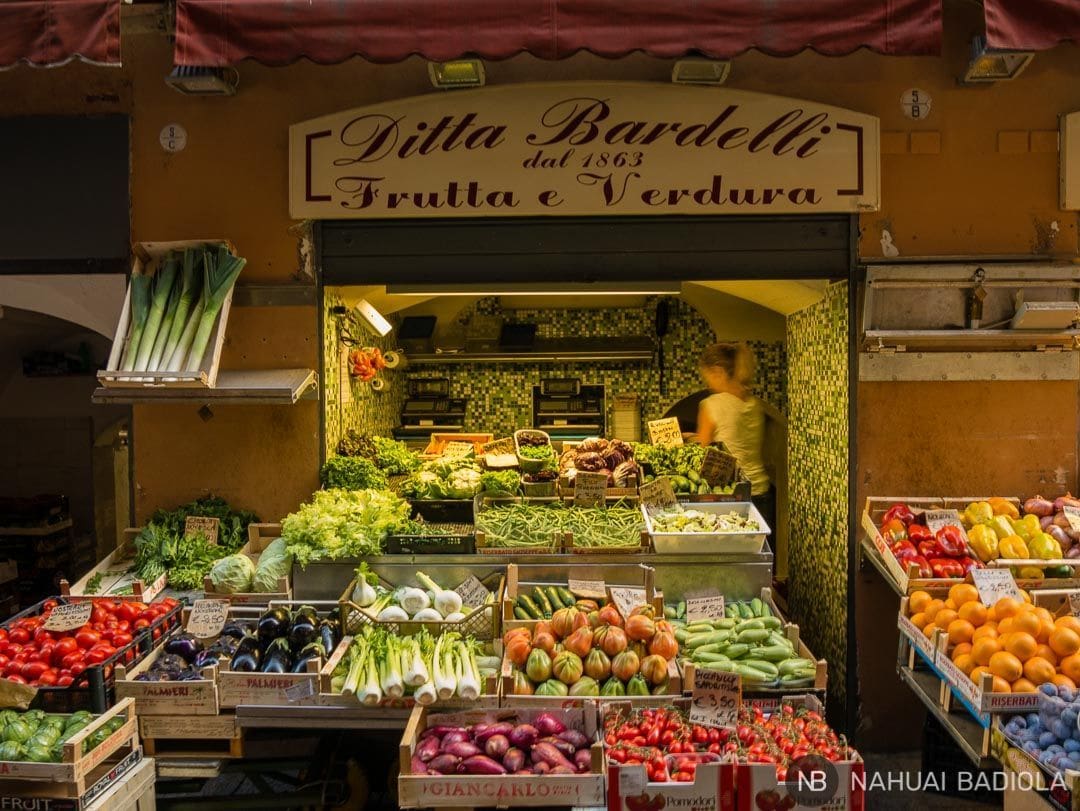
Most Italians I know have admitted at some point that the food in Emilia-Romagna is spectacular. And Bologna, in particular, stands out as a city where sticking to a diet won't be easy at all. There's a reason they call it La Grossa (The Fat One).
Some of the typical dishes you'll want to try are tagliatelle al succo di prosciutto (pasta with pork sauce), tortellini in brodo (broth with stuffed pasta), passatelli (a type of pasta made from breadcrumbs and Parmesan cheese), or cotoletta alla petroniana (breaded meat, fried and cooked in a truffle and ricotta sauce).
Besides these hearty dishes, locals are especially proud of their Parmesan cheese (and rightly so) and their mortadella. Don't leave without tasting them.
Locals recommended spots like Biassanot, Serguei, or All’Osteria Bottega (for the latter, you need to book in advance). However, almost all the restaurants we tried are quite far from the center.
If you also want to, or can, get away from the busiest areas, I recommend Antica Trattoria da Gigina. But keep in mind that prices here aren't cheap (it cost us €28 per person, without alcohol).
The day we walked down Via San Luca from the monastery, we had a reasonably priced lunch set menu at Trattoria Meloncello.
On the flip side, if you're looking for a break from Bolognese dishes, I can recommend the Persian restaurant Pars. It'll surprise you, both for its unique customer service and its delicious sauces and rice dishes. One of my favorites is the Adas Polo, although everything I tried was great.
Between 6 and 8 in the evening, join the crowd of students, locals, and tourists having an aperitivo. Many bars usually offer a small free buffet of snacks when you buy a drink. This is a great way to have dinner on a budget.
Although there are spots like this in Bologna with much better quality, in most of them the free buffet is mostly flour-based and fried foods.

Personally, I prefer paying a bit more and eating well. A perfect spot to do this is a bar/deli on Via Pescherie Vecchie or any other place in that area (known as the Quadrilatero). We tried Salumeria Simoni, where we ordered a delicious cheese and charcuterie board for two plus drinks for just €10/person. Not bad, right?
An even cheaper option can be Osteria del Sole, a historic spot where you're allowed to bring your own food from outside while enjoying their wines.
Other great places for a budget-friendly aperitivo dinner are the Mercato delle Erbe and the Mercato di Mezzo, both marked on the map at the bottom of this page.
And last but not least, the sweets.
Most desserts you'll find in restaurants will be homemade and contain some type of cheese, like mascarpone, and lots and lots of egg yolks. You only need to look at the deep yellow color of all their creams to see it.
Another option is to skip dessert and grab a delicious gelato while strolling under the porticoes. Even though most gelato shops make artisanal gelato, Cremeria Funivia deserves a special shoutout, thanks to its selection of innovative flavors and mouthwatering combinations.
When to go
In winter, temperatures range between 0 and 6ºC, while in summer they reach highs of 30ºC, which can be a bit stifling for a day of city sightseeing.
Therefore, spring and autumn are the best times to visit.
Rainfall isn't too extreme, although November tends to be the wettest month. In any case, the magnificent and omnipresent porticoes will protect you from both the sun and the rain, so no worries.
Whenever it is, go to Bologna! You won't regret it.
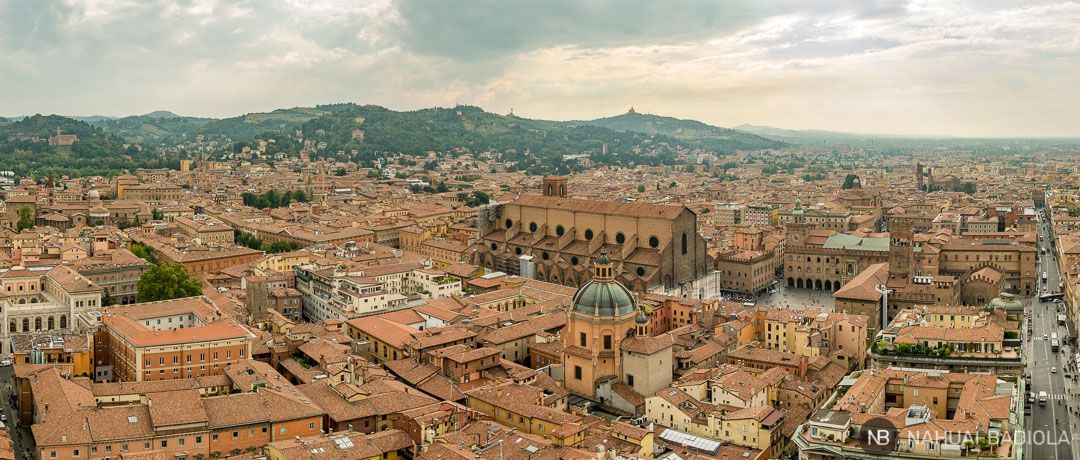
We were there in mid-September 2016. Out of 4 days, 3 were sunny and quite warm (shorts and a T-shirt are more than enough). On the 4th, as a farewell, a heavy storm hit that lasted several hours.
How to get there
There are 3 ways to get there:
By plane
If you're traveling to Italy from Spain and your first stop is Bologna, you're in luck.
The airport, located just 15 minutes from the city, receives dozens of direct Ryanair flights from major hubs like Madrid, Barcelona, Seville, Valencia, Ibiza, Gran Canaria, or Tenerife. Iberia and Vueling also operate from Madrid and Barcelona, respectively.

A great way to save money when flying with these airlines is learning how to travel with just a carry-on bag.
Trust me, once you learn to travel light, you won't want to carry big suitcases ever again. Not only do you save a lot of money on the ticket price, but you also save time (check-in and waiting at the baggage claim carousel).
Plus, it lets you carry your small bag without worrying about hurting your back, moving around much more nimbly and freely.
When searching for flights, I like using Trabber because the price it shows is final (includes card fees and other taxes). That said, I always check prices on eDreams and Momondo too.
You never know who will have the best deals! 😉
By train
If you are traveling around Italy by train, you are in luck, because Bologna station connects with other Italian capitals, such as Milan, Florence, or Rome, via high-speed trains (called frecciabianca, frecciarossa, frecciargento…).
They are very fast and, if you buy your ticket well in advance on this page, you can save quite a bit thanks to the supereconomy fare.
Plus, the station is just a 15-minute walk from the very center of the city, so you won't need to take any other transport (this will depend on the time you arrive or the size of your luggage, of course).
Car

If you are exploring Italy by car, you will need to park it on the outskirts or in the parking lot provided by your accommodation.
Traffic in its medieval historic center is limited to residents and public transport.
Therefore, if your accommodation is located there, talk to the owners to find out where you can drive and where to park. We chose to look for accommodation with private parking on the outskirts.
If you are not staying the night in Bologna, you might be interested to know that, right next to the train station, we found a fairly close and accessible paid parking lot (I've marked the spot on the map at the bottom of this page). There are others, although the closer you get to the historic center, the more expensive they will be.
Where to sleep
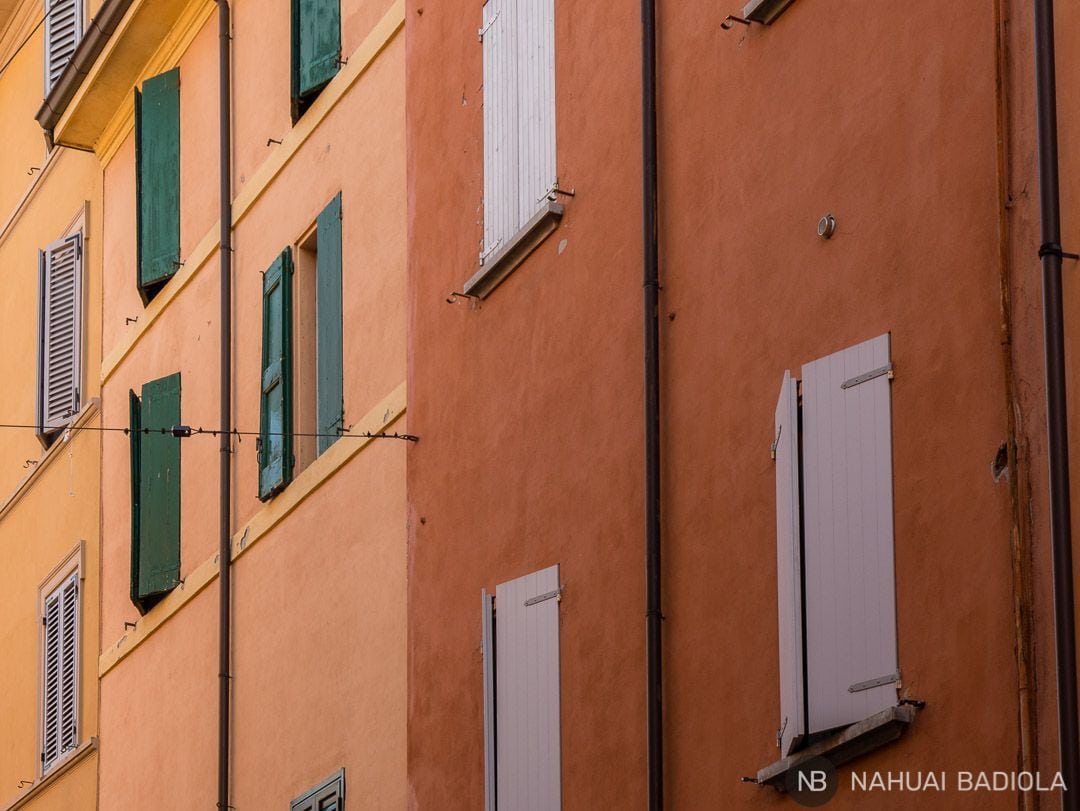
My recommendation, if you don't have a car, is to stay near the center of Bologna. The outskirts are not especially nice, especially at night.
There are plenty of options on Booking and Airbnb. Mind you, the closer to the core, the more expensive your choice will be. So, for the sake of your wallet, book as soon as possible.
If you have a car, you will have to pay for private parking in the center and you won't be able to drive everywhere in the city. In this case, a great option is to stay in the surrounding area, just like we did.
Specifically, we spent several nights at the Airbnb apartment “Terrace between fair&city center”, which is also listed on TripAdvisor as HomeinBo.
The apartment is spacious, renovated, and has everything you need. At night, you can hear some noise coming from neighboring flats and the road, but nothing out of the ordinary. The service from the owner upon arrival was top-notch. Plus, it has a private parking space.
From there, you can walk for about 30 minutes or catch a bus and reach the center with no hassle.
The only drawback is that you have to walk past the train station. And we all know that train stations, especially at night, are not particularly safe or pleasant. However, we didn't have any issues on our usual walks back home from the historic center after having an aperitivo.
Also, if you are here to attend a convention or congress, this house's location is perfect, as it is just a few minutes away from the Fiera.
Useful links
- Trenitalia website.
- Hotel deals in Bologna.
- Flights to Italy: Trabber, eDreams, Momondo, and Vueling.
- 5% discount on your IATI travel insurance.
I hope I've convinced you that Bologna is well worth a visit, at least once in your life. With all the flights connecting this wonderful city with Spain, what are you waiting for?
And if you are on a road trip around Italy, don't stop here—keep discovering it:
- A one-week road trip through Umbria.
- A stroll through Florence.
- Tuscany road trip: Siena and Val d'Orcia.
- Venice in the low season.
- Lake Como road trip.
- A weekend in Rome: how to make the most of it.
- The wonders of the Amalfi Coast.
And remember, if you need more information about this destination, leave me a comment below. I'll be more than happy to help you in any way I can.
Great review!! Thanks for sharing your travel experiences!
My pleasure, Marab! I'm so glad you enjoyed the post. Cheers!