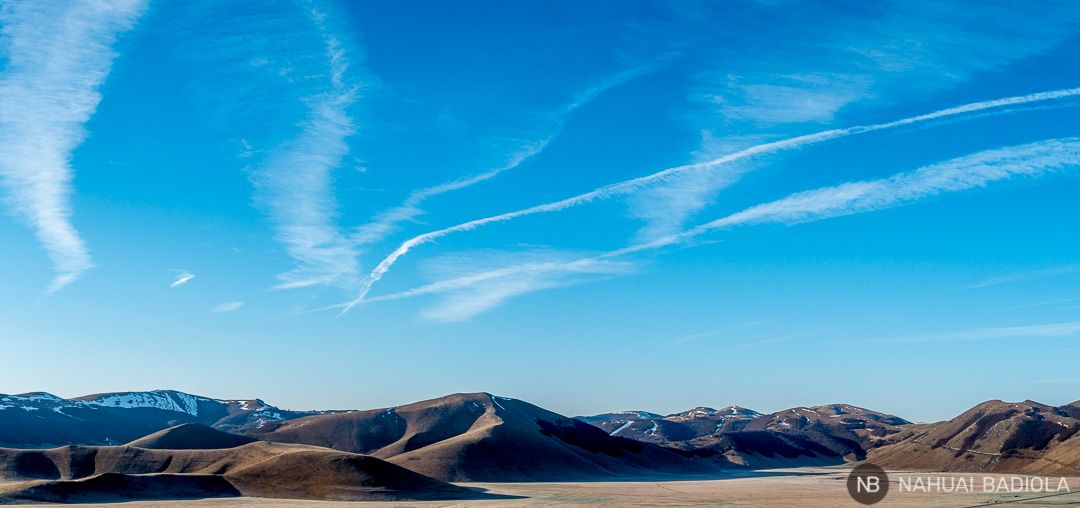
Castelluccio di Norcia is famous in Italy for its fioritura. Together with Mount Vettore, it is a perfect starting point to discover the Sibillini Mountains.
The Monti Sibillini National Park is a lesser-known destination in Italy compared to other regions in the country. It is located between Le Marche to the east and Umbria to the west.
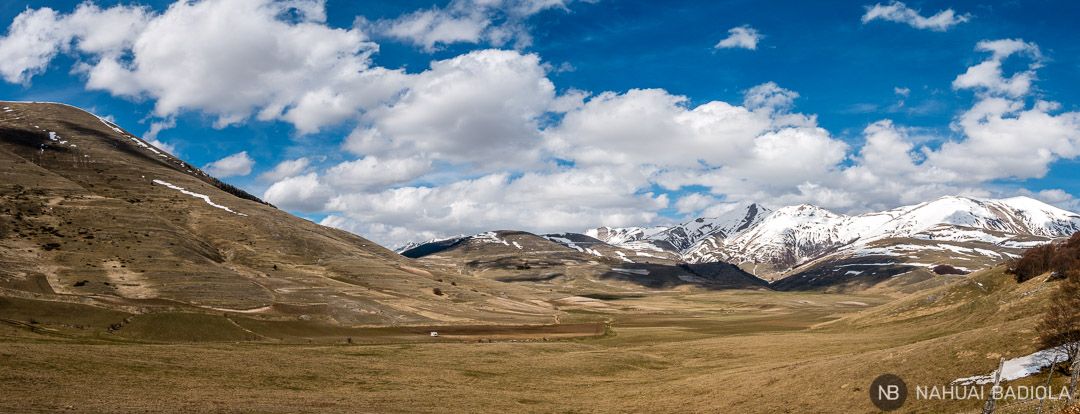
Castelluccio di Norcia and the so-called Piano Grande and Piccolo at its feet are the park's most renowned spots. These valleys were once glacial lakes and today host the cultivation of the famous Castelluccio lentil, among other legumes.
For just a few weeks a year, known as la fioritura, an explosion of color floods these fields thanks to the blooming of the crops.
But there is much more to admire in this mountain range, perfect for lovers of hiking and nature in its purest state. It won't leave you indifferent.
When to go
The fioritura, which takes place during the months of June and July, transforms the landscape with wonderful colors in an already beautiful natural setting, which draws hordes of tourists.
At those times, the landscape takes on wonderful floral hues; however, the crowds can be a hassle. The roads fill with cars and campervans, local accommodations become more expensive and, worse yet, sell out well in advance.
The views are wonderful, although are you willing to pay the price?
On the other hand, during the rest of the year, the pilgrimage subsides and the Sibillini Mountains park welcomes a different type of visitor: fans of hiking and mountain biking.
In winter, many of the trails are covered in snow, as parts of the park sit at over 2,000 meters in altitude.
Later on, when spring begins, wild flowers start to break through and more routes become accessible to hikers.
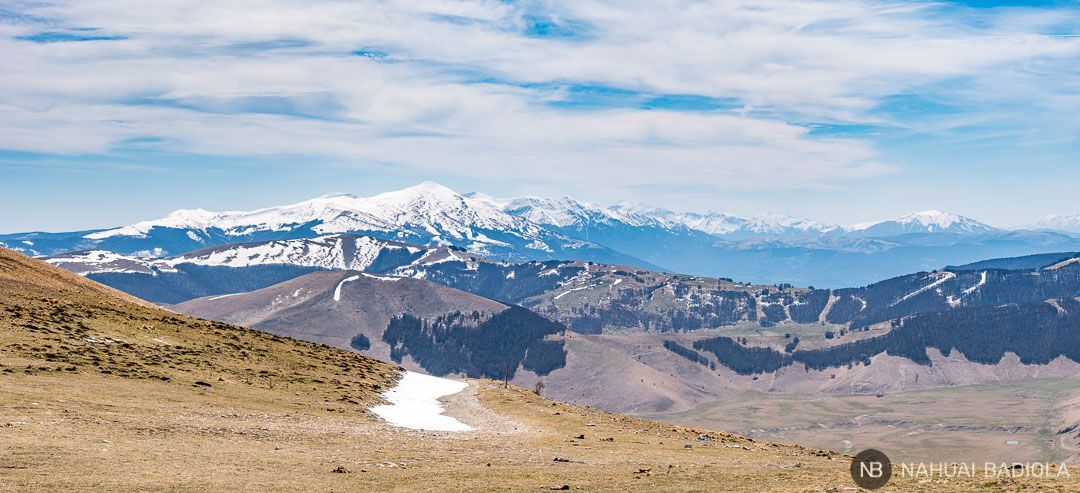
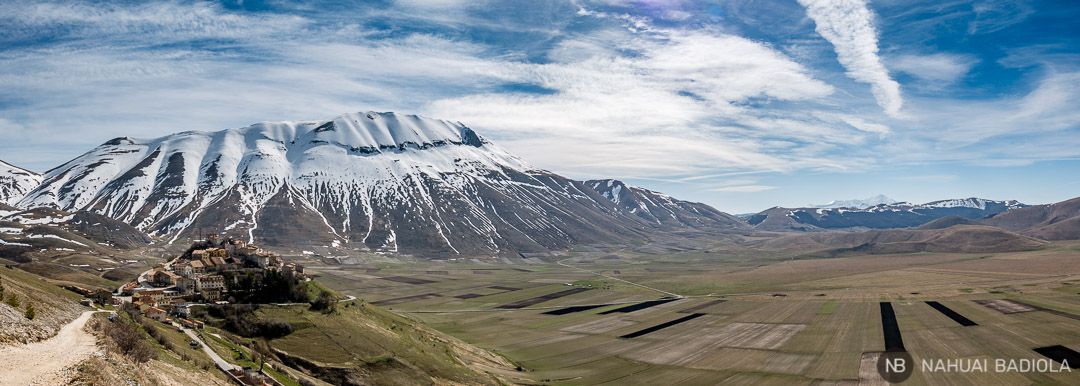
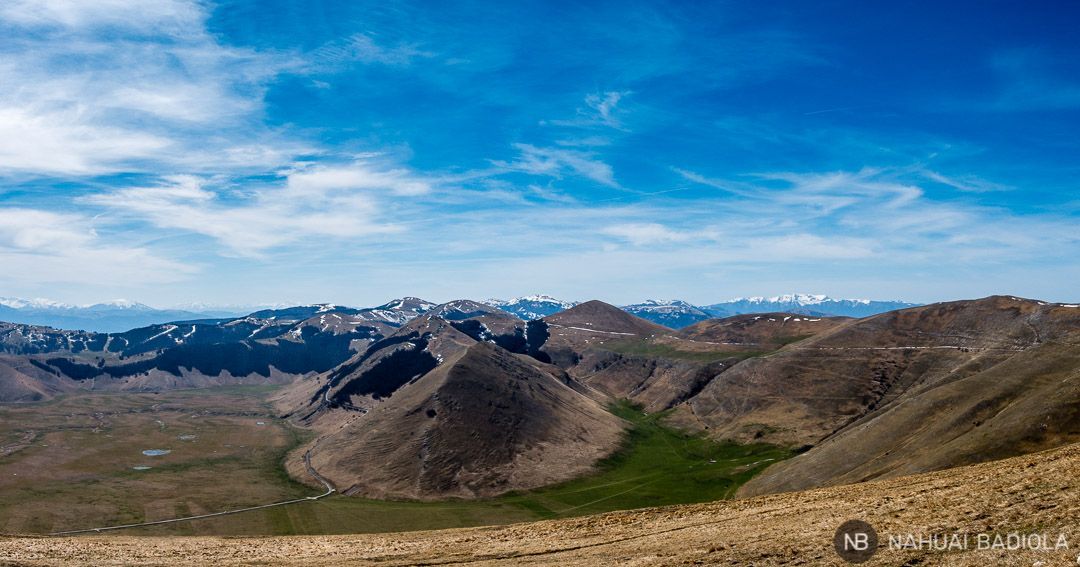
We visited Castelluccio in early April 2016. There was still snow on Mount Vettore and the surrounding peaks, as you can see in the photos. However, the weather was perfect for walking.
Even so, we can't wait to go back in summer to see the fioritura.
How to get there
The best way to get there and get around this area is by private or rental car, since public transport is scarce.
If you're a fan of mountain biking and are in great physical shape, you can also explore this natural park by bicycle.
What to bring
If you're going trekking, I recommend wearing boots or comfortable walking shoes (even better if they are water-resistant), a windbreaker, and a fleece to keep warm, as the wind on the mountaintops is quite cold, especially if the snow hasn't melted yet when you visit.
Also remember to bring sunglasses, sunscreen, and some type of cap or hat.
Hiking and more
The natural park is full of routes for mountaineers, mostly well signposted. You can read more details on the park's website.
Specifically, there are three types of trails:
- The Great Sibillini Ring. This route covers 124 kilometers and is divided into 9 well-defined stages. Before heading out, check the trail conditions and the availability of open mountain huts on the official website.
- Hiking itineraries. These routes can be done in a single day and are mostly circular. We did the 22-kilometer E13 route. I'll tell you all about it right now.
- Nature trails. These paths are shorter and accessible for casual hikers who might not be as experienced or have less time available.
If you are going to do one or more of these routes, I recommend downloading the park map to your phone found here, along with the map for the specific route you're interested in.
You can also buy an inexpensive paper copy in the village of Castelluccio.
And if you like mountain biking, take a look at the numerous MTB routes.
Our experience on the E13
I recommend setting aside a full day for this circular route (22 km) and making several stops (if you have a photographer in your group, as was my case, this will be mandatory… every five minutes!).
It starts with a climb that departs from Castelluccio and tackles about 300 meters of elevation gain in 4 kilometers.
Throughout the entire journey, you will enjoy spectacular views of Mount Vettore over Castelluccio di Norcia and the Piano Grande.
The path continues along the heights until, once you reach the other side of the valley, it descends along a less clearly marked (though still recognizable) trail down to the base of the Piano Grande. From there, you can loop all the way around the plain, as the original itinerary suggests, or take alternative shortcuts.
It's hard to get lost at this point, since there is nothing blocking the view from where you stand to Castelluccio, where the route ends.
However, I recommend walking up to one of the small ponds (indicated on the map at the bottom of the page) if you want to see the majestic Vettore reflected in the water.
And get ready for the final climb up to the village… not bad after walking over 20 kilometers.
In short, a gorgeous but demanding route that I definitely recommend. The views leave you speechless, and I imagine that during the fioritura it must be even more spectacular, if that's even possible.
Where to sleep
There are plenty of accommodation options near the park, such as hotels, hostels, agritourisms, B&Bs, campsites, or even free camping in permitted areas. You can see where and under what conditions you can camp on this map.
We managed to stay for two nights in the village of Castelluccio di Norcia itself, which turned out to be the perfect base camp for hiking the E13 route.
Specifically, we spent two nights at the Agriturismo Antica Cascina Brandimarte, in the Belvedere room, with views of Mount Vettore.
It is a renovated accommodation with all kinds of amenities, its own parking area, and a fantastic restaurant. The buffet breakfast was very complete, and the staff's service was attentive and lovely.
In the mid-afternoon, they offered complimentary tea and pastries to their guests in the shared lounge. They even provided free use of bicycles.
We paid €114 per couple per night on a half-board basis (drinks not included), and I must say the dinners were delicious.

However, this price goes up during high season, especially during the famous fioritura.
Where to Eat
For hikes, the easiest thing to do is bring your food with you, along with plenty of water. Along the E13 trail, we found a couple of drinking fountains, though I'm not sure if the same is true for the rest of the routes.
We bought a freshly made sandwich at the small grocery shop next to the parking square in Castelluccio. The bread, as in all of Umbria, was unsalted. This might seem strange for those of us used to salted bread; however, I assure you it pairs perfectly with the tasty cured meats produced in the region. I encourage you to try it!
Besides, after more than 10 kilometers hiking up mountains, what wouldn't taste good?

Our accommodation, the Agriturismo Antica Cascina Brandimarte, had a restaurant, so we had dinner there both nights.
The menu they offered with the half-board rate was very good, although with a more limited selection than the full menu. We tried the river trout, the wild boar, and the pork, as well as several soups with local grains and legumes (the lentils are especially famous). Everything was delicious and, once again, the service we received was exceptional.
Budget
- Accommodation: 228€ in total, 57€ per person per night (half board).
- Food (the rest): 34€, 8.5€ per person per day.
- Activities: Hiking is free, and the bikes were complimentary. 🙂
In total, we spent 262€ on 2 full days, 65.5€ per person per day.
If you love mountaineering or have the chance to visit this area during June and July, do not hesitate.
Castelluccio di Norcia and the Monti Sibillini National Park will make you fall in love with the majesty of their mountains and their colorful blooms.
Useful links
- Park website.
- Trail map.
- Agriturismo Antica Cascina Brandimarte.
- Hotels.
- Flight deals to Italy: Trabber, eDreams, Momondo, and Vueling.
- 5% discount on IATI insurance.
Road tripping through Umbria and Tuscany? Then, I am sure you will be interested in this:
- A one-week road trip through Umbria.
- Orvieto and the dying city: hypnotic beauties.
- Perugia, the romantic capital of Umbria.
- Assisi, much more than a pilgrimage town.
- Medieval charm, great food, and cycling around Lake Trasimeno.
- A stroll through Florence.
- Tuscany road trip: Siena and Val d'Orcia.
- The roofless abbey of San Galgano.
- Maremma Natural Park: Tuscany's pristine beaches.
And if you want to check out more Italy essentials:
- A weekend in Rome.
- Venice in the low season.
- Lake Como road trip.
- Bologna, the city of porticoes.
- The wonders of the Amalfi Coast.
And remember, if you need more details about this area, do not hesitate to reach out, I will gladly help you with anything I can.