
Orvieto and Cività di Bagnoregio, also known as ‘the dying city’, aren't Italy's most famous towns, but they definitely deserve a spot in the TOP 10.
The photos speak for themselves…
Separated by just 20 kilometers, both perch high atop hills, giving them an unusually stunning skyline.
Yet, you can spot plenty of subtle and striking differences between them, which makes them, even more so, an absolute must-see if you're visiting the area.
Orvieto
Perched on a hill of volcanic tuff and clay, Orvieto's silhouette stands out between the sky and the surrounding valleys: a walled city overlooking the plains.
Although settlements date back to the Bronze and Iron Ages, the town we see today has Etruscan roots. And trust me, it's gorgeous.

How to get there
The easiest way to get to Orvieto is by car. If that's your case, your best bet is finding accommodation with parking included. Otherwise, you can pay by the hour at parking lots dotted around the center or those located on the way up the hill, which are connected to the town by elevators.
If you're traveling around the country by train, you're in luck. The station is right across from the funicular line that takes you up to the walled city.
When to go
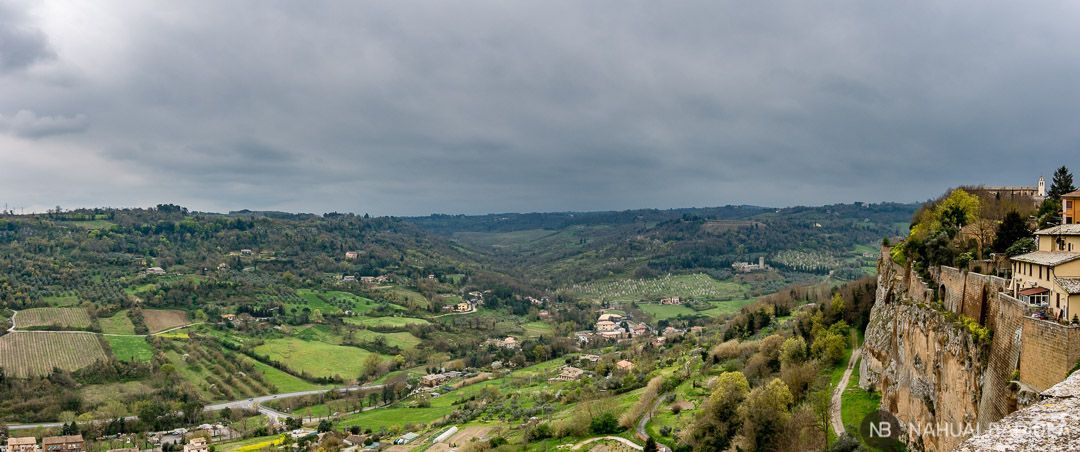
Being in central Italy, it's an area that gets pretty hot in summer, as well as very crowded.
In winter, on the other hand, temperatures can drop quite low and rain is more frequent.
Avoid, whenever possible, any kind of religious holiday, like Holy Week. Crowds in Orvieto are common during those dates.
We were there in the spring of 2016, the perfect season for sightseeing in this part of Italy.
What to see
You'll fall in love with this town the very second you set foot on its cobblestone streets.

Here are a few ideas:
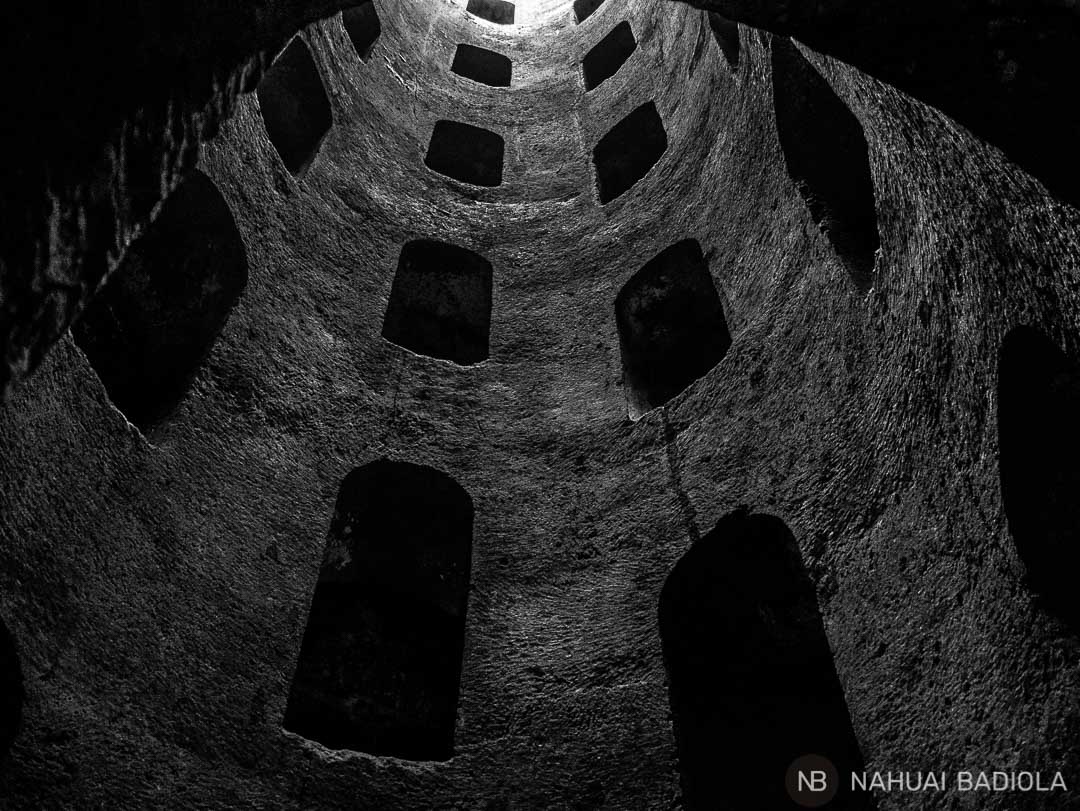
- Visit the fascinating structure of the Etruscan well (€5/person), with its double-helix staircases that never meet.
- If you're into archaeology, Orvieto is full of ancient underground tunnels open for tourist visits.
- Climb the Torre del Moro, for just €2.8, and admire its architecture from above.
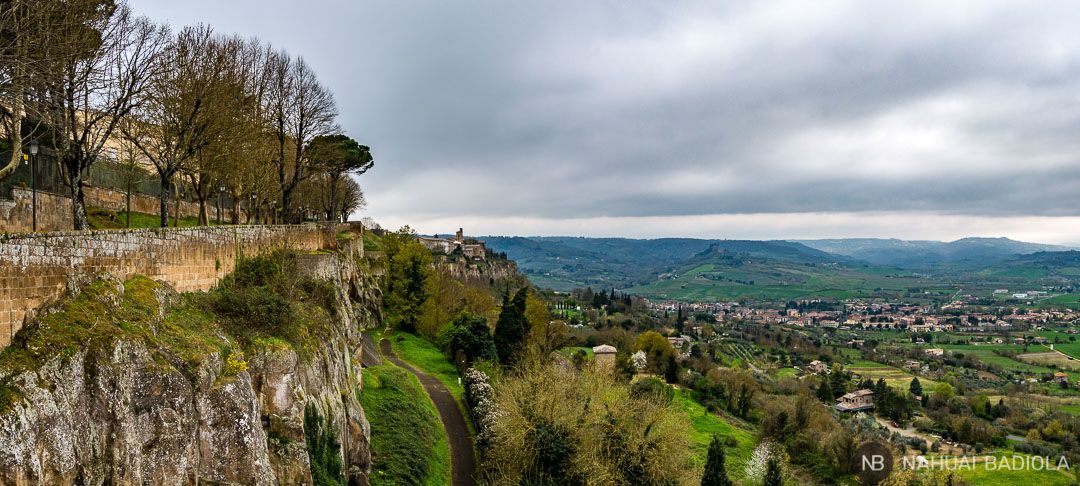
- Stroll along Viale G. Carducci. It's a pedestrian path running along part of the northern perimeter of the town. There's no car traffic and barely any passersby compared to the rest of town. It's lined with rows of trees that shelter you with their shade on sunny days, and the views are completely breathtaking. What more could you ask for?
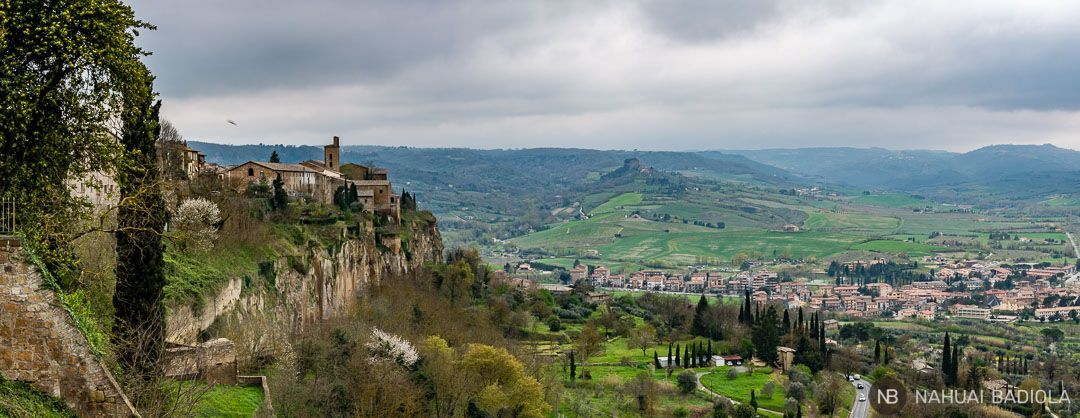
- Admire the Duomo, an imposing building towering over the town (€3 entry fee, unless you're a parishioner just coming in to pray).
- Wander its medieval streets, sit down at a restaurant, and savor Umbria's delicious cuisine.
- Relax and watch the rolling hills and zigzagging cypress trees from any of its city walls.
- Leave the town and find a lookout point to take it all in in its full glory. A great spot for this is the bar/lookout Il Belvedere di Orvieto (I've pinned it on the map at the bottom of the page). You can drive up there to enjoy the landscape, snap hundreds of photos (speaking from experience), and grab a drink while soaking in the view until it's etched into your memory. A tea on the terrace cost us €2; the view was priceless.
Where to sleep
Among the many options available in the upper part of town, we chose the B&B Ripa Medici, which also included parking and breakfast in the rate.
They offer just 2 independent rooms inside an apartment, plus a full house for rent. This means the attention to detail and care received from the hosts are exceptional. They live in a separate house, though close to the rental properties, where they welcome guests and serve an excellent, full breakfast.
They have reserved parking for their guests in one of the lots at the base of the hill. Once you drop your bags off in the room, they personally guide you to the parking lot and show you how easy it is to take the elevator, which drops you off just steps from the accommodation.
Without a doubt, the best part about this place is its stunning views of the surrounding valleys and its peaceful location: an unbeatable spot to spend the night in Orvieto.

Where to Eat
For restaurants, we were recommended Trattoria La Pergola, Trattoria del Moro Aronne, the restaurant Al Pozzo Etrusco da Giovanni, and Le Grotte del Funaro.
However, since it was a public holiday in Italy (I already warned you to avoid holidays and religious festivals, right?), everywhere was fully booked... including plenty of other spots we called.
In the end, we managed to eat at Osteria del Rè, thanks to the fact that they didn't take reservations!
We got lucky and, when we arrived, there were 2 open tables left. Mind you, the place was packed to the brim (just like every other restaurant in town that day).
The waitresses were incredibly efficient considering how busy it was, and the food was fantastic:
A squash and goat cheese appetizer to start, a fresh pasta dish with truffles, and another of wild boar with tomato and polenta, plus a mouthwatering ricotta dessert with chestnuts and nuts to share (thank goodness we didn't order 2, it was a total calorie bomb!).
All for €33, and on top of that, they knocked €3 off the final bill! I'd go back in a heartbeat.
If you want to spend less, we grabbed dinner with a sandwich from Piccola Panineria del Corso.
They're tasty and prices range from €5-7. Drinks are a bit pricier, so if you're taking it back to your room, I'd recommend grabbing them at a supermarket.
Cività di Bagnoregio
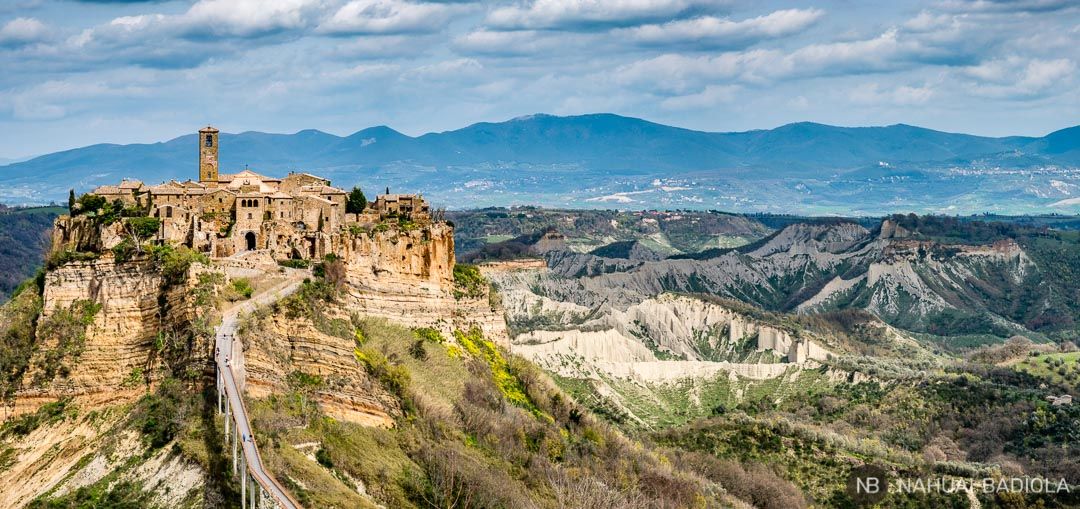
This village sits right in the middle of the Valle dei Calanchi (Valley of the Badlands) and was founded by the Etruscans on a hill of volcanic tuff and clay.
Due to its terrain, this area suffers from heavy erosion caused by wind, streams, and deforestation. This has been key in shaping what is known today as ‘la città che muore’ (the dying city).
Erosion was already a major issue back in Etruscan times, and it has only gotten worse since, gradually chipping away inches from the settlement's perimeter and even lowering its elevation.
That's how many palaces collapsed off the cliff, including the house where Saint Bonaventure was born.
In the 17th century, after an earthquake, the site was practically abandoned; although by that time most of the population had already moved to the neighboring town: Bagnoregio.

How to get there
Originally, you could enter the city through 5 different gates.
Today, it's only accessible via a footbridge leading from Bagnoregio, with a €1.5 entry fee to access Cività.
The easiest way is driving to Bagnoregio and finding parking near the walkway down to the bridge (I've marked nearby parking spots on the map at the bottom of this page).
If they're full, you have 2 options: park further away in Bagnoregio and walk over, or park at Hosteria del Ponte, which offers free parking for customers. Just remember, you'll need to order something!
Another option is taking a bus from Orvieto as part of an organized tour. As you can imagine, I wouldn't recommend rolling up with 50 other people on top of the crowds you'll already find visiting Cività itself.
I prefer exploring at my own pace, without rushing, without crowds… But it's an option, after all!
When to go

Just like with Orvieto, I recommend visiting in spring; however, don't miss it no matter what time of year you find yourself in the area.
Specifically, we were there in early April 2016, and, as you can see in the photos, the weather was great. I'd even dare say that, at times, it was too hot, especially walking up the steep hill that leads to the town.
What to see
In my opinion, the most beautiful things about Cività are:
- Its silhouette outlined against the mountains of clay and volcanic ash; a small medieval town tucked away in a time bubble and suspended over an almost extraterrestrial wasteland. Enjoy the views, not just from the viewpoint next to the parking lot, but with every step you take across the bridge separating it from Bagnoregio. Look up and admire its melancholic beauty.
- Its medieval streets, almost intact, where time seems to have stood still; the views of the Valle dei Calanchi from it, its flowered archways, its secret corners… Go discover them.

Where to eat and sleep
Even though they call it ‘the dying city’, there is life inside it: it's packed with restaurants, B&Bs, and rental houses.
I didn't stay the night there, but you can find plenty of options on Booking.
For lunch, when buying the 1.5€ ticket, they offered us an appetizer with a glass of wine for just 6€ more per person at the bar Da Peppone sulla Piazza. We went for it, and it wasn't bad. Three toasts with different types of pâté or spreads alongside a pretty good glass of wine on a terrace right on the square.
However, if you feel like eating more or having more freedom of choice, you have tons of options; there's no need to take the deal.
Budget
- Accommodation: 84,4€ in total, 42,2€ per person per night (breakfast, parking, and taxes included).
- Food: 62€, 31€ per person (1 dinner, 2 lunches).
- Tickets: 24,6€, 12,3€ per person.
In total, we spent 171€ for 2 days/1 night, 85,5€ per person.
Useful links
- Accommodation in Orvieto B&B Ripa Medici.
- Flight deals to Italy: Trabber, eDreams, Momondo, and Vueling.
- 5% discount on your IATI travel insurance.
Road tripping through Umbria and Tuscany? Then I'm sure you'll love this:
- A one-week road trip through Umbria.
- Medieval charm, great food, and cycling around Lake Trasimeno.
- Perugia, the romantic capital of Umbria.
- Assisi, much more than a pilgrimage town.
- Trekking in Castelluccio di Norcia.
- A stroll through Florence.
- Tuscany road trip: Siena and Val d'Orcia.
- The roofless abbey of San Galgano.
- Maremma Natural Park: Tuscany's pristine beaches.
And if you want to check out more Italy essentials:
- A weekend in Rome.
- Venice in the low season.
- Lake Como road trip.
- Bologna, the city of porticoes.
- The wonders of the Amalfi Coast.
I hope I've convinced you that it's totally worth including these two Etruscan towns in your Italy itinerary.
And remember, if you need more details about this or other areas, leave me a comment down below. I'll gladly help you with whatever I can.
Very interesting and thorough. I'm heading to the area this weekend and taking note of all the recommendations! Thank you so much.
Awesome! I'm glad it gave you some ideas. 🙂
Thanks for your comment and have a great trip!
Very interesting. We are in Viterbo and tomorrow we are going to Bolsena and Orvieto. The information has been very helpful.
Hi, Jesús!
Thank you so much for your comment. I love hearing that the blog is being helpful to you. You made my day! Keep enjoying your trip through Italy. Warm regards.
Very interesting and thorough review!
Thank you so much, Shellbi! I'm really glad you liked it. 🙂